

6 shuttered jute mills to go private in Tk 500cr per-unit deal
- Update Time : Thursday, April 23, 2026
Staff Reporter:
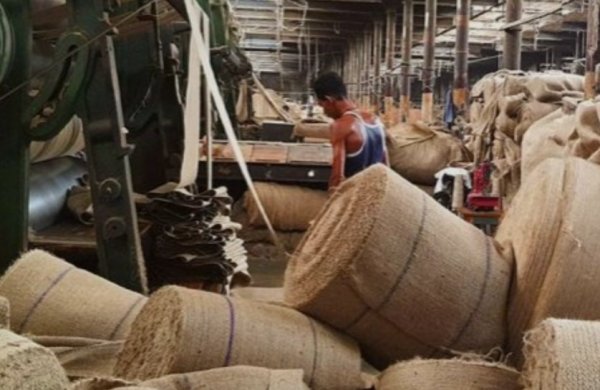
The government has announced plans to lease six closed jute mills to private investors by December this year, marking a significant step in its strategy to revitalise the state-owned jute sector and attract fresh capital into the industry.
Commerce, Industries, Textiles and Jute Minister Khandaker Abdul Muktadir confirmed the policy decision following an emergency stakeholder meeting at the Textiles and Jute Ministry on Thursday.
The move aims to unlock idle assets, generate employment, and boost export earnings from one of the country’s traditional industrial pillars.
“We are moving ahead in a planned manner to reopen closed jute mills and increase new investment, employment and export earnings,” Minister Muktadir told journalists. “The process of transferring six more jute mills to the private sector will be completed by December this year.”
Investment and employment projections
According to ministerial estimates, each of the six mills earmarked for leasing could attract initial investments ranging from Tk 200 crore to Tk 500 crore, depending on infrastructure condition and investor proposals. The government projects that every revived mill will create more than 1,000 direct jobs, contributing to local economic recovery in mill-dependent communities.
“This is not just about reopening factories,” said State Minister for Textiles and Jute Shariful Alam. “We are inspecting textile and jute mills systematically and working quickly based on ground realities. Our goal is to revive closed jute mills as economically viable, industrially important units.”
Progress on privatisation
The announcement builds on earlier efforts to restructure the Bangladesh Jute Mills Corporation (BJMC). In 2020, the activities of 25 jute mills under BJMC were suspended. Subsequently, the government initiated a leasing process for 20 of these units.
To date, 14 mills have been leased to private operators, with nine already resumed production-oriented activities. These revived units have collectively generated employment for approximately 9,500 workers, demonstrating the potential of public-private partnership models in industrial rehabilitation.
Minister Muktadir highlighted that investors who have taken over previously closed mills have made “significant investments and created employment”, describing the outcomes as “quite positive”.
Strategic economic objectives
Beyond immediate job creation, the government views the leasing initiative as part of a broader industrial policy. Minister Muktadir outlined three strategic objectives:
Export diversification: Revived jute mills can contribute to Bangladesh’s growing portfolio of eco-friendly exports, capitalising on global demand for sustainable packaging and textiles.
Import substitution: Repurposing some facilities for alternative industrial uses could reduce reliance on imported raw materials and finished goods.
Foreign exchange earnings: A productive jute sector can generate valuable foreign currency through exports of yarn, sacks, geo-textiles and diversified jute products.
“All mills under the Ministry of Textiles and Jute will return to production-oriented activities in the near future,” the Minister stated. “Some will operate in the jute sector, while others may transition to different industrial sectors through targeted investment.”
Institutional coordination
Thursday’s stakeholder briefing was attended by senior officials, including BIDA Chairman Chowdhury Ashik Mahmud bin Harun, Textiles and Jute Ministry Secretary Abdun Naser Khan, and chairpersons of both the Bangladesh Textile Mills Corporation and Bangladesh Jute Mills Corporation. Representatives from prospective investor groups also participated, signalling strong private-sector interest.
The Bangladesh Investment Development Authority is expected to play a facilitating role in streamlining approvals and ensuring a transparent leasing process. Industry observers note that clear regulatory frameworks and timely handover procedures will be critical to maintaining investor confidence.
Market context and outlook
Bangladesh’s jute industry, once the world’s largest, has faced decades of challenges, including outdated machinery, labour disputes, and competition from synthetic alternatives. However, rising global environmental awareness has renewed interest in jute as a biodegradable, carbon-negative fibre.
Analysts suggest that private management could bring operational efficiency, technology upgrades, and market linkages that state-run entities have struggled to deliver. If the six mills scheduled for leasing this year follow the trajectory of earlier success stories, the sector could see a meaningful contribution to GDP growth and rural employment.
The Ministry of Textiles and Jute has indicated that further announcements regarding additional mill leases will follow once the current tranche is finalised. For now, the focus remains on completing due diligence, finalising lease agreements, and ensuring that revived units commence operations without delay.
As Bangladesh seeks to balance industrial heritage with economic modernisation, the jute sector’s revival may serve as a test case for how state-owned assets can be repurposed to meet 21st-century market demands.









Editor & Publisher: Golam Mostafa Jibon
News & Commercial Office:
2 R. K Mission Road, Dhaka & Railgate, Sirajganj.
Hotline: 01715-319996, 01558-314179
E-mail : editor.thedailysky@gmail.com
news.thedailysky@gmail.com