

Don’t support 50% independent bank directors in principle: Mashrur Arefin
- Update Time : Saturday, April 11, 2026
TDS Desk:
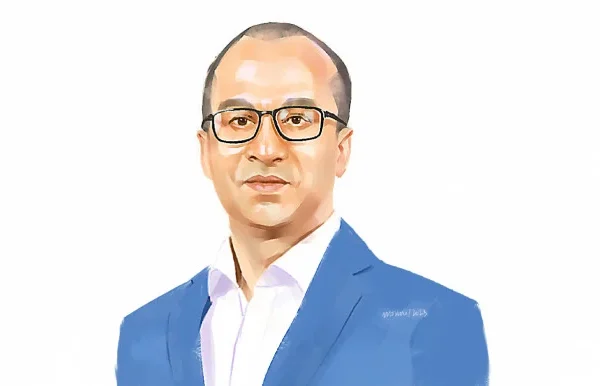
Association of Bankers, Bangladesh (ABB) Chairman Mashrur Arefin, has said he does not in principle support the draft provision in the Bank Companies Act that proposes 50% independent directors on a bank board.
Such a structure could create internal conflict and place managing directors in a difficult position, he warned at the “Risk Conference on Banking and Finance 2026” in Dhaka today.
“If 7 out of 15 are independent directors, a conflict will arise between the two groups, and the managing director will be caught in the middle,” he said at the event organised by DFINE and DINET.
Mashrur said former Bangladesh Bank governor Ahsan H Mansur had proposed that bank boards should include 50% independent directors, but he opposes the idea as ABB chairman.
“I am opposing this proposal because I don’t support it in principle. They will just come and fill up the banks, added Mashrur, who is also the managing director of City Bank.
He questioned the assumption that independent directors are inherently superior to sponsor directors. “I do not believe that people with the same Bangladeshi background and similar educational qualifications become angels as independent directors while sponsor directors become devils. That is impossible.”
He added that international banking practices should be followed instead. According to him, independent directors typically focus on three key areas: bank growth, governance, and credit risk management.
“In foreign banks, these roles are clearly defined. People with Harvard-level education and experience sit in those positions and are well compensated,” he said.
He also took a critical view of the performance of independent directors in many banks, saying what knowledge he gathered as ABB chairman from several bank MDs tells him that the performance of these directors is not satisfactory.
“In many cases, they are busy circulating CVs and trying to please different stakeholders and the board.”
He added, “If this is the reality, then 50% independent directors will not help. Instead, the same cycle will continue in the banking sector.”
Main risks in banks are liquidity and credit
Masrur Arefin said credit risk and liquidity risk are the two biggest risks in the banking sector.
“Today, market risk is also emerging strongly. Banks collapse due to credit risk, boards are ‘captured’ because of credit risk, and even boards themselves fail because of credit risk,” said the banker.
He added that board-level interference in loan decisions often increases risk further when loans turn bad.
“When the board determines who gets a loan, it can create greater risk if the loan is not good,” he said. “The board puts pressure on the MD to disburse funds. Loans are approved without proper consideration of why a loan of Tk100 crore is needed or whether adequate collateral exists.”
He added that pressure-driven lending, including so-called identity-less or unnamed loans, has made the situation more severe.
“At times, it becomes impossible to identify the real beneficiary,” he said. “Banks also procure goods worth Tk300-400, and even there, interference occurs. These are signs of a weak bank. That is why strong legal support is essential.”
Masrur Arefin said banking culture is also critical, although it is not captured in CAMELS ratings. “Bank officials can understand which direction the bank’s culture is moving. Whether the MD is making decisions in an authoritarian way is also important,” he said.
He noted that past perceptions of non-performing loans were misleading. “Earlier, we lived in a fool’s paradise thinking non-performing loans were 9%. Now we know they are around 40%. Knowing this truth is already 50% of the victory. Earlier, we did not even know the truth,” he said.
He added that MDs often focus excessively on pleasing boards, which can distort governance. “But this is also a matter of personal integrity,” he said. “It is not enough to only focus on the board. There are credit risk committees, credit committees, and other important bodies.”
He said decisions cannot be imposed solely from the board level. “Banking is handling people’s money, so there is a responsibility towards the public.”









Editor & Publisher: Golam Mostafa Jibon
News & Commercial Office:
2 R. K Mission Road, Dhaka & Railgate, Sirajganj.
Hotline: 01715-319996, 01558-314179
E-mail : editor.thedailysky@gmail.com
news.thedailysky@gmail.com