

Budget FY27: Will patients truly benefit from healthcare tax breaks?
- Update Time : Wednesday, May 20, 2026
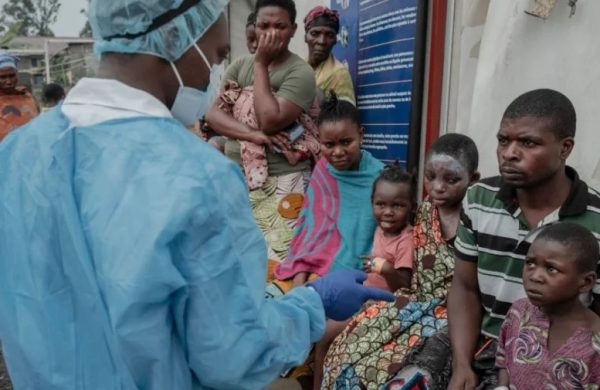
The central challenge for the state is expanding its fiscal capacity without adding to the cost-of-living burdens already affecting ordinary households
Online Desk:
The national budget for the upcoming FY27 arrives at a time when the government is grappling with a difficult combination of persistent inflation, eroded consumer purchasing power, job market uncertainty, and severe domestic revenue deficits.
In response to these pressures, policymakers are crafting a strategy that attempts to balance public welfare and aggressive revenue generation.
On one hand, the government plans to introduce crucial tax relief to lower treatment costs for cardiac and kidney patients.
On the other hand, it aims to extract an additional Tk6,000 crore in revenue by increasing taxes on tobacco and alcohol, all while executing the largest Annual Development Program (ADP) in the nation’s history.
This stark contrast has led economists and policy analysts to view the upcoming budget as a mixed reality of relief and pressure.
The central challenge for the state is expanding its fiscal capacity without adding to the cost-of-living burdens already affecting ordinary households.
Healthcare expenditures remain a primary driver of financial vulnerability for middle- and lower-income families in Bangladesh.
Data from the Bangladesh National Health Accounts indicates that over 70% of total healthcare expenditures are borne directly out-of-pocket by patients, an exceptionally high ratio by international standards.
This spending routinely pushes vulnerable families into poverty, forcing many to liquidate assets, exhaust life savings, or take on high-interest debt to afford basic medical procedures, diagnostics, and prescription drugs.
To address this crisis, the Ministry of Finance and the National Revenue Board (NBR) are discussing significant structural tax exemptions.
The government is considering completely withdrawing the current 10% Value Added Tax (VAT) imposed on coronary stents (heart rings).
With standard stent prices ranging from Tk50,000 to Tk2 lakh, this exemption could lower treatment costs by up to Tk10,000 per procedure.
According to the Directorate General of Drug Administration (DGDA), Bangladesh utilizes approximately 45,000 coronary stents annually, meaning a vast pool of patients would benefit directly.
A 2024 study by the Bangladesh Institute of Development Studies (BIDS) revealed that patients requiring regular dialysis face an average monthly cost exceeding Tk46,000, pushing nearly 93% of affected families into financial distress.
In response, the budget is expected to propose the total removal of the 7.5% advance tax currently levied on imported dialysis machinery and related medical consumables.
The budget plans to introduce new fiscal incentives for the domestic production of Active Pharmaceutical Ingredients (API).
By reducing import duties on these core components, the state aims to lower long-term manufacturing costs for domestic pharmaceutical companies, reduce foreign exchange demand, and protect consumers from escalating medicine prices.
Escalating sin taxes amid corporate lobbying
To offset these healthcare concessions and meet broader revenue targets, the NBR plans to aggressively increase taxes on tobacco and alcohol products, aligning with global trends of imposing higher “sin taxes” on harmful consumer goods.
The revenue authority intends to raise retail prices across all cigarette tiers—premium, high, medium, and low.
Under the current ad-valorem tax system, where the tax burden scales alongside retail price hikes, tobacco products already contribute over Tk40,000 crore annually to the exchequer.
The upcoming changes aim to extract an additional Tk6,000 crore from the sector. Additionally, a specific VAT of Tk400 per liter is being considered for locally manufactured alcohol.
However, this revenue strategy has sparked debate due to intense lobbying by major tobacco conglomerates.
Corporate manufacturers are pushing to replace the current ad-valorem framework with a “specific tax structure,” arguing that a flat tax per unit would simplify tax administration.
Senior NBR officials oppose this structural shift, warning that moving away from percentage-based taxation could weaken government price-control mechanisms, lower state revenues by up to Tk4,000 crore, and artificially inflate corporate profit margins at the expense of public collections.
The underlying structural problem of the domestic tax framework remains its heavy reliance on indirect taxes, such as VAT, import duties, and source taxes.
These duties are applied uniformly, a low-income laborer pays the exact same tax rate on basic consumer goods as a wealthy executive, making the system inherently regressive and widening wealth inequality.
Prof Mustafizur Rahman, honorary fellow at the CPD, observed that the NBR historically targets areas where VAT collection is guaranteed and easily accessible, rather than taking the administrative risks necessary to capture direct income taxes from high-net-worth individuals.
Former NBR chairman Muhammad Abdul Mazid noted that powerful interest groups frequently exercise undue influence over fiscal policymaking, making it difficult for the state to enforce effective progressive taxation on the wealthy.






Editor & Publisher: Golam Mostafa Jibon
News & Commercial Office:
2 R. K Mission Road, Dhaka & Railgate, Sirajganj.
Hotline: 01715-319996, 01558-314179
E-mail : editor.thedailysky@gmail.com
news.thedailysky@gmail.com