

River sand could be Bangladesh’s ‘white gold’
- Update Time : Monday, August 10, 2026
TDS Desk:
Semiconductor chips are the driving force behind today’s digital economy and form the foundation of emerging technologies such as artificial intelligence (AI), 5G communications and electric vehicles.
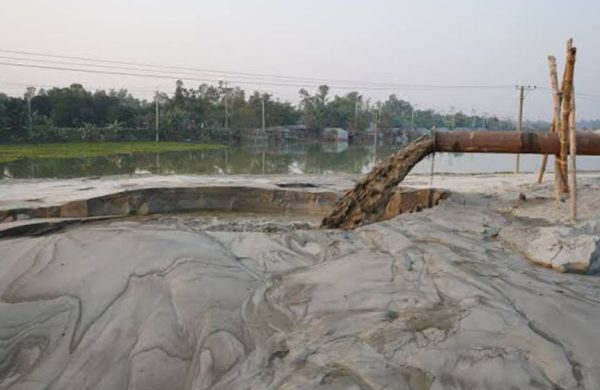
Amid the global chip race, river sand could open up an unprecedented opportunity for Bangladesh. The vast quantities of quartz-rich sand deposited in the basins of the Brahmaputra-Jamuna, Padma and Teesta rivers, which flow down from the Himalayas, are increasingly emerging as a potential ‘strategic resource’ for the country.
Dr Md Sohel Rana, deputy director of the Bangladesh Geological Survey Department, highlighted the potential in a recent review study.
According to the research paper, Bangladesh is one of the world’s largest sedimentary deltas, receiving around 1 billion to 1.5 billion tonnes of sediment and sand from the Himalayas every year.
The sand is not merely a material for river dredging or construction. It contains high-quality quartz as well as valuable minerals such as ilmenite, zircon and rutile. Around 90% of the semiconductor industry is silicon-based, while high-purity quartz is the primary raw material for producing silicon.
The study found that sand from Bangladesh’s major rivers is rich in quartz. Recent mineral-processing tests have demonstrated that silica with a purity of 99.5% can be produced from the sand using the reverse flotation method. This level of purity is suitable for high-quality glass manufacturing.
However, the production of semiconductor-grade silicon wafers requires an exceptionally high level of purity — 99.99%, commonly referred to as ‘9N’.
Although Bangladesh’s sand meets the standards required by the glass industry, whether it can achieve the international standards required for chip manufacturing remains a subject for further research.
The research paper cautioned that there is currently insufficient scientific evidence to confirm that the country’s sand can meet the stringent purity requirements of chip manufacturing.
Even trace amounts of impurities such as iron, aluminium and titanium, as well as crystal defects, can pose problems in chip production. Therefore, ultra-trace impurity analysis and pilot-scale refining technology are now needed to determine whether the sand can be upgraded to international standards.
Dr Sohel Rana said there was a huge difference between silica used in the glass industry and semiconductor-grade quartz.
“We must remember that there is a world of difference between silica for the glass industry and semiconductor-grade quartz. Establishing a chip fabrication plant, or fab, is extremely expensive and risky. Therefore, my recommendation is that Bangladesh should adopt a phased strategy. Initially, we should focus on producing high-purity silica and on IC design,” he said.
According to Dr Rana, Bangladesh could become a leading supplier of materials to the global semiconductor market by 2050 if the government establishes a specialised ‘Sand Processing and Research Centre’ and develops the skills of the country’s talented engineers in the sector.
The study has proposed a national roadmap for the period from 2026 to 2050. The first phase focuses on intensive research into the purity of river sand and the development of research infrastructure.
Bangladesh currently has a large pool of engineers and the advantage of competitive labour costs, factors that could support the development of the semiconductor industry.









Editor & Publisher: Golam Mostafa Jibon
News & Commercial Office:
2 R. K Mission Road, Dhaka & Railgate, Sirajganj.
Hotline: 01715-319996, 01558-314179
E-mail : editor.thedailysky@gmail.com
news.thedailysky@gmail.com