

Proposed cyber law amendment may deepen free-speech concerns: ICNL
- Update Time : Saturday, September 19, 2026
Staff Reporter:
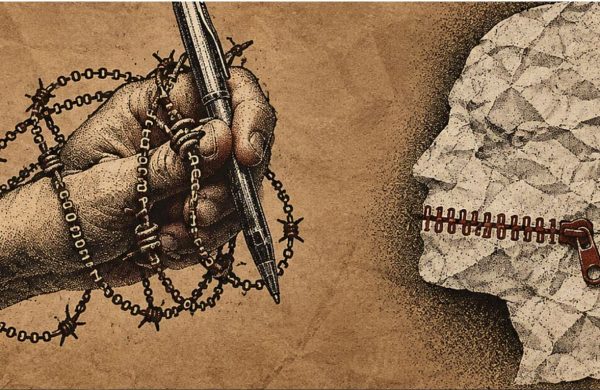
A proposed amendment to Bangladesh’s cyber law contains broad restrictions on online expression that could affect journalism, public debate and criticism of government policies, while expanding authorities’ powers to block online content and make arrests without warrants, according to an analysis by the International Center for Not-for-Profit Law (ICNL).
The Washington-based legal organisation said several provisions of the proposed Cyber Protection (Amendment) Act, 2026 appear inconsistent with Bangladesh’s obligations under the International Covenant on Civil and Political Rights (ICCPR).
The analysis, dated September 18, examines what ICNL identifies as some of the most problematic provisions in the proposed amendment. It also says several concerns previously raised about Bangladesh’s cyber-law framework remain unresolved.
The government published the draft on September 13 and set September 23 as the deadline for submitting comments and recommendations, allowing 10 days for public feedback.
ICNL said the consultation process itself falls short of international standards for meaningful public participation.
According to the organisation, the government did not seek public input before preparing the draft, while it remains unclear how the proposed legislation was formulated and what considerations influenced its provisions.
“Not only is 10 days insufficient for meaningful and inclusive engagement with the public, only engaging through written submissions could exclude many stakeholder groups, such as small media outlets and grassroots organisations,” the analysis said.
ICNL recommended extending the consultation period and creating additional avenues for public participation, including in-person town-hall meetings across the country.
BLOCKING POWERS AND INDEPENDENT MEDIA
One of ICNL’s principal concerns relates to Article 8, which retains the director general of the National Cyber Protection Agency’s authority to block or remove websites and online information while expanding the range of authorities that can initiate such action.
Under the proposed amendment, law enforcement agencies, the Ministry of Information and Broadcasting and other government-authorised agencies or forces could seek the blocking, removal or relocation of websites and online information through the agency’s director general and, where applicable, the Bangladesh Telecommunication Regulatory Commission.
ICNL said such action could be taken without prior approval or oversight from a court or another independent body.
The draft allows action against online information, “misinformation” or “rumour” deemed to undermine or risk undermining national integrity, security, defence or public order; incite or risk inciting religious or communal hatred or ethnic violence; provide instructions for disorder or criminal activity; defame an individual or institution; or be derogatory to the state.
ICNL described these grounds as vague and undefined, saying they could give authorities broad discretion over what people can publish or access online.
The organisation said expressions such as information that “poses a risk of undermining the integrity of the country”, “poses a risk of communal hatred” or is “derogatory to the State” are too broad to meet the freedom-of-expression requirements under Article 19 of the ICCPR.
It warned that Article 8 could have a chilling effect on independent media, particularly reporting critical of government policies, and could affect public debate and accountability.
The absence of independent judicial review before content is removed could also create scope for arbitrary enforcement, including the possibility of content being targeted for political or personal reasons, ICNL said.
The organisation recommended requiring approval from an independent judicial body before any website or online content is blocked, removed or relocated, and narrowly defining all categories of prohibited content.
CONCERNS OVER DEFAMATION, ‘HUMILIATION’ AND ‘BULLYING’
ICNL also raised concerns over Article 25, which would criminalise the publication of speech, including audio and images, deemed “defamatory or humiliating or bullying”.
The draft defines defamation to include content deemed “false, distorted, misleading, defamatory or harmful” that has been recorded, edited or modified electronically or prepared or modified using artificial intelligence.
ICNL argued that the definition is sufficiently broad to potentially cover protected forms of expression, including art and satire. It also questioned the use of criminal penalties for defamation, saying civil remedies would generally be less restrictive.
The definitions of “humiliating” and “bullying” also came under criticism.
Under the draft, humiliation may include conduct or expression that causes another person to appear “humiliated, contemptible, inferior or disrespectful” or damages their social status or reputation.
ICNL said the definition is subjective, does not require an intention to humiliate and does not distinguish between true and false information.
The analysis gave the example of a journalist publishing a video showing someone accepting a bribe, saying such reporting could potentially fall within the provision because it could humiliate the person shown.
Similarly, ICNL said the term “bullying” could be interpreted broadly enough to encompass public criticism of a person’s political positions or policies, potentially allowing authorities to take action against critics.
‘RUMOUR’ PROVISION RAISES CONCERN OVER BREAKING NEWS
ICNL reserved some of its strongest criticism for Article 26(A), which would criminalise the dissemination of “rumours” and “misinformation” in cyberspace.
Under the draft, a “rumour” is defined as unconfirmed or unverified information, news or claims that create, or are likely to create, confusion, panic, agitation or social instability.
ICNL said the definition could potentially encompass forms of breaking news because information emerging during a developing event may initially be unconfirmed or unverified.
The organisation also criticised the definition of “misinformation”, which covers false, distorted or misleading information intentionally created or disseminated to mislead, deceive or cause harm to an individual, the public, an institution or the state.
According to ICNL, the provision does not clearly establish when information should be considered false or when it causes harm, leaving authorities with broad discretion to determine whether an offence has been committed.
The analysis cited a hypothetical example in which an economist forecasts Bangladesh’s GDP growth at 5 percent while the government forecasts 7 percent. Authorities could potentially argue that the economist intentionally disseminated false information harmful to the state or a government institution, it said.
Such provisions could have a “silencing effect on journalists, media, academics, civil society and the broader public”, ICNL said, recommending that Articles 25(1) and 26(A) be removed.
The concerns come as the government has said the proposed amendment is intended, among other things, to address cyberbullying, protect women, young people and journalists, and prevent misuse of the law. Home Minister Salahuddin Ahmed said on September 13 that the government was conscious of citizens’ freedom of expression and personal security.
ARREST WITHOUT WARRANT
The analysis also flagged the classification of offences under Article 25 as cognisable, meaning police could arrest a person without a judicially authorised arrest warrant for allegedly publishing defamatory, humiliating or bullying content.
ICNL said this could allow an individual law enforcement officer to make an arrest based on the officer’s assessment that an online post falls within those categories.
Combined with what it considers vague definitions under Article 25, the organisation said the provision creates “an enormous opportunity for arbitrary enforcement”.
It recommended that, if Article 25 remains in the legislation, offences under it should be made non-cognisable and arrests relating to speech should require warrants authorised by an independent judicial body.
LIABILITY FOR ORGANISATIONS
ICNL also warned of potentially far-reaching consequences for media companies, civil society groups and other organisations under Article 29.
If a cybercrime is committed by a company or organisation, the draft could hold owners, chief executives, directors, managers, employees and representatives directly concerned with the offence responsible unless they can establish that the offence occurred without their knowledge or that they exercised due diligence to prevent it.
ICNL said this provision places the burden on representatives to demonstrate their lack of knowledge and could expose directors and employees of civil society organisations to prosecution over conduct by an individual acting on behalf of the organisation.
Article 29(3) goes further by empowering courts to suspend or cancel an organisation’s registration, licence or operations following a conviction.
ICNL said closing an organisation could constitute a disproportionate penalty, particularly where the underlying offence involves online speech.
“Every media organisation, civil society organisation and private entity is now in danger of being shut down if one of its employees makes or publishes a statement that violates any of the overly broad and vague restrictions of content,” the analysis said.
Depending on how the provision is interpreted, organisations could potentially face liability even when an employee made the disputed statement outside their official duties, ICNL warned.
The organisation said involuntary dissolution should be a last-resort measure reserved for the most serious abuses. It concluded that shutting down a business, organisation or other legal entity would not be proportionate to many of the offences covered by the proposed law.
The proposed amendment remains under consideration, with the government inviting public comments until September 23.







Editor & Publisher: Golam Mostafa Jibon
News & Commercial Office:
2 R. K Mission Road, Dhaka & Railgate, Sirajganj.
Hotline: 01715-319996, 01558-314179
E-mail : editor.thedailysky@gmail.com
news.thedailysky@gmail.com