

After the Numbers Rest
- Update Time : Saturday, December 27, 2025

—Kaniz Kakon—
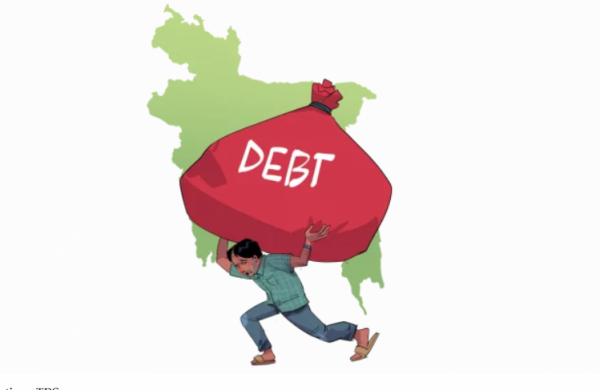
Behind every stable exchange rate lies a political decision about care, risk, and dignity. And Bangladesh’s recent movement in foreign debt figures has often been interpreted as a technical adjustment, another oscillation in a long ledger of borrowing and repayment. Yet by mid-2025, the numbers are stable enough to demand interpretation beyond accounting. Data tracking Bangladesh’s external debt shows a total of approximately $113.2 billion in June 2025, firmly within the $104-115 billion range observed over the past two years. Within this overall stability, a quarterly reduction of about $1.45 billion has been recorded in recent reporting cycles, with declines reported in private-sector external liabilities. This is not an anomaly but a documented trend. What matters, however, is not whether debt rises or falls by a billion dollars in a quarter, but how the burden of that debt structures state priorities and social outcomes. External debt is not neutral. It shapes how much a government can spend on care, how risk is transferred to future generations, and whose lives are protected when fiscal choices become constrained.
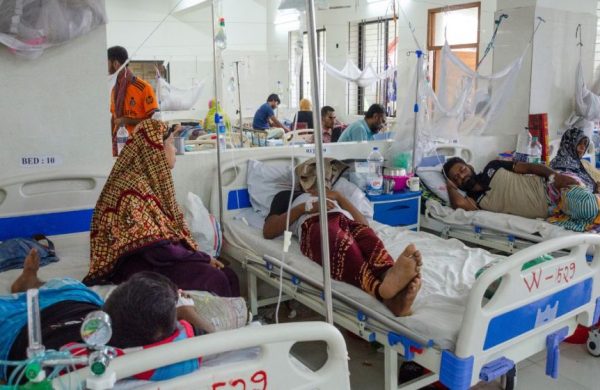
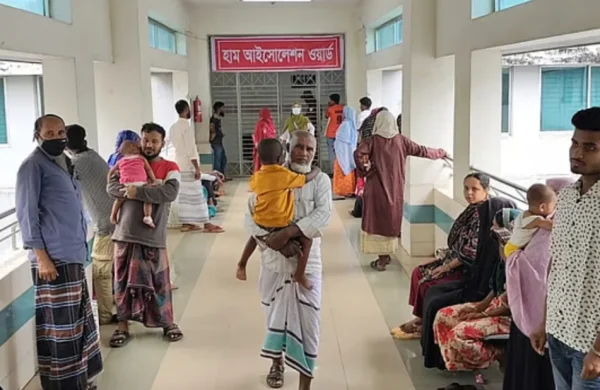
The human rights implications of debt become unmistakable when set against Bangladesh’s social spending profile, particularly the entrenched “one-percent barrier”. In the FY 2024-25 budget, public health spending stood at around 0.74 per cent of GDP, among the lowest globally, while education spending was approximately 1.69 per cent of GDP. In the FY 2025-26 budget, education allocation declined further to around 1.53 per cent of GDP, reinforcing a pattern of structural underinvestment in human capability. These are not marginal deviations but long-term fiscal choices. This chronic austerity explains Bangladesh’s heavy reliance on private payment for essential services. National Health Accounts and World Bank data confirm that 73-74 per cent of total health expenditure is paid out of pocket, turning illness into a financial shock that routinely pushes households toward vulnerability. Against this backdrop, the recent stabilisation of foreign debt acquires moral significance. Even without a dramatic reduction, slower debt accumulation creates fiscal breathing space, raising a critical question: whether that space is used to rebuild social infrastructure or merely to reassure markets. Human rights principles do not demand debt elimination; they demand that debt management not undermine basic dignity.
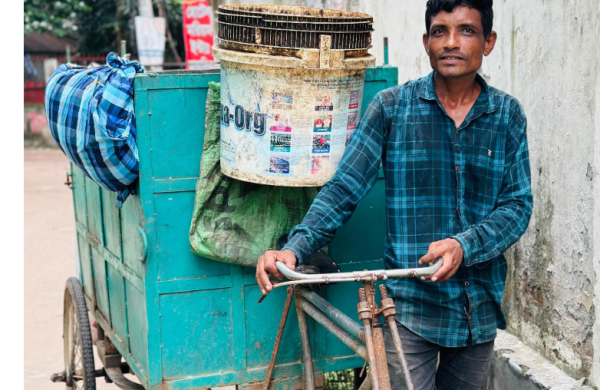
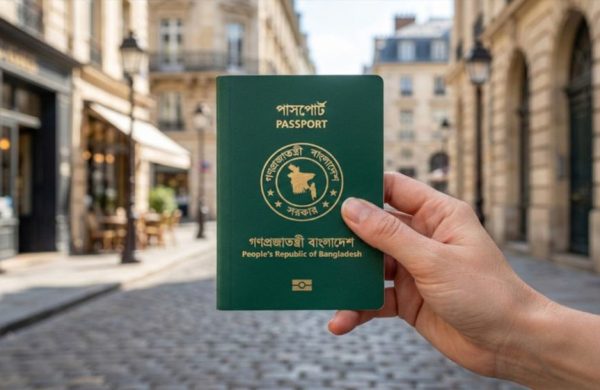
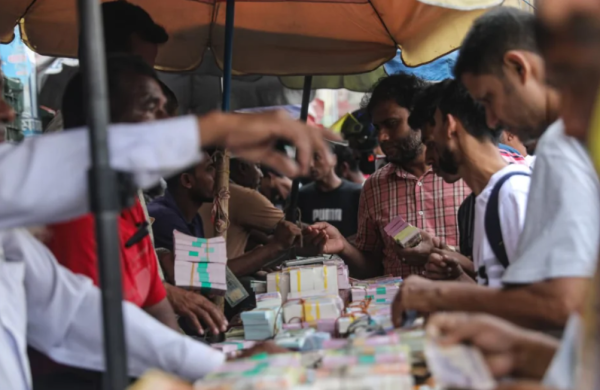
Remittances have played a decisive role in easing external pressure, and here the data is unequivocal. Bangladesh received $23.9 billion in remittances in FY 2023-24, followed by a historic surge that pushed inflows beyond $30 billion by the end of FY 2024-25, the highest level ever recorded. These inflows have strengthened foreign-exchange reserves and helped maintain relative exchange-rate stability, shielding the economy from imported inflation. This stabilisation has real human-rights value: volatile currencies translate directly into higher food and medicine prices, undermining the right to an adequate standard of living. Yet remittances are not abstract capital flows. Official records confirm that approximately 13 million Bangladeshis have migrated overseas cumulatively since the mid-1970s, forming the backbone of this remittance economy. Many do so under conditions of legal insecurity, recruitment debt, and limited labour protection. When remittance earnings quietly underpin macroeconomic stability and debt servicing, a moral imbalance emerges: national resilience is achieved through individualised sacrifice.
The debt–rights equation is further complicated by Bangladesh’s longstanding struggle with revenue mobilisation and financial leakage. Despite being a lower-middle-income country with significant development needs, Bangladesh’s tax-to-GDP ratio remains around 7-8 per cent, among the lowest in the world. This weak revenue base limits the state’s ability to finance social goods and deepens reliance on borrowing. At the same time, international assessments over the past decade have consistently highlighted large-scale losses through trade misinvoicing and illicit financial flows. While precise annual figures vary by methodology, the core reality is undisputed: billions of dollars have exited the economy through channels that generate no social return. In this context, efforts to tighten financial oversight and curb illicit outflows are not merely technocratic reforms; they are human-rights imperatives, as recovered public resources directly expand the state’s capacity to fund health, education, and climate resilience without shifting the burden onto the poor.
Public sector borrowing dominates Bangladesh’s external debt profile, accounting for approximately 80 per cent of total foreign liabilities. Public debt is repaid collectively by citizens who had no role in contracting it, often through a narrow tax base reliant on consumption taxes, making the burden regressive by design. Low-income households thus contribute proportionally more while receiving fewer public benefits in return. The recent stabilisation and modest easing of external debt, combined with record remittance inflows, should not be mistaken for a victory but understood as a pause, a moment of recalibration. The facts are clear: debt remains heavy, though manageable; social spending is critically low; remittances have historically been high; and the revenue base is fragile. What remains undecided is the political meaning of this moment. Fiscal space can be utilised to strengthen progressive taxation, scrutinise the social returns of debt-financed projects, and realign policy toward long-term human development, or it can be used to preserve appearances while inequality deepens. Human rights are not advanced by balance sheets alone, but by whether economic stabilisation is treated as a means to human security rather than an end in itself. In the end, the true measure of stability is not how comfortably the state repays its debts, but how safely its people live within the economy it creates.
——————————————————————————
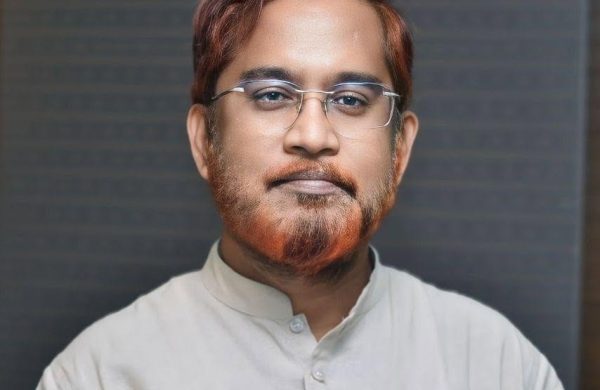
The writer is an Assistant Professor in the Department of Philosophy at IUBAT and is currently on study leave, residing in Oslo, Norway





Editor & Publisher: Golam Mostafa Jibon
News & Commercial Office:
2 R. K Mission Road, Dhaka & Railgate, Sirajganj.
Hotline: 01715-319996, 01558-314179
E-mail : editor.thedailysky@gmail.com
news.thedailysky@gmail.com