

BAU STUDENTS SHINE INTERNATIONALLY: TEAM ‘THE GOLDEN LOOP’ SECURES TOP 6 SPOT AT FOOD SYSTEMS INNOVATION CHALLENGE
- Update Time : Thursday, October 1, 2026
BAU Correspondent
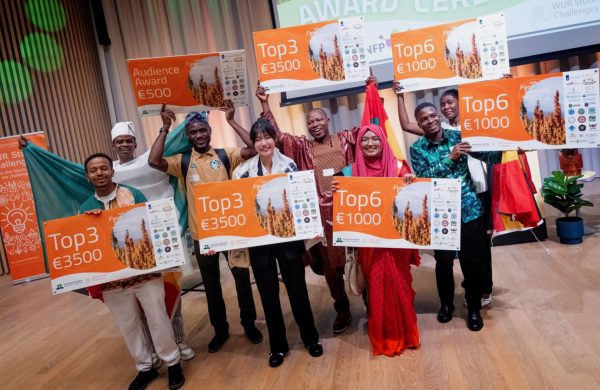
Young Bangladeshi researchers have once again made their mark on the international stage, with a student team from Bangladesh Agricultural University (BAU) securing a position among the top six finalists at the prestigious “Food Systems Innovation Challenge 2026” held in the Netherlands.
Competing against 119 teams from around the globe, team ‘The Golden Loop’ earned international acclaim for their sustainable food system solution utilizing jute and jute waste products.
Noor Ayesha Chowdhury, a core member of the team, confirmed the achievement on Thursday (October 1).
The eight-member team features six students from BAU: Mst. Murshida Jahan Mitu, Noor Ayesha Chowdhury, Md. Arkanul Islam Aqib, Sadia Islam Badhon, Sayfa Saba Hossain, and Kursi Rahman Luba. The remaining two members are Liton Tripura from Dhaka University (DU) and Ahsanee Takbeem Esha from Chittagong University (CU).
The team executed their research under the supervision of Prof. Dr. Harunur Rashid (Department of Fisheries Management, BAU) and Prof. Dr. Md. Motiur Rahman (Department of Fisheries Biology and Genetics, BAU), alongside technical guidance from Prof. Dr. Md. Mofizur Rahman Jahangir (Department of Soil Science, BAU).
The international competition spanned from January to September, culminating in the grand finale on September 29 at the Omnia Auditorium of Wageningen University & Research in the Netherlands. Finalists presented their implemented projects through pitch rounds, interactive Q&A sessions with the jury panel, and live demonstrations to distinguished guests.
At the heart of ‘The Golden Loop’s’ innovation was Bangladesh’s traditional golden fiber—jute.
Detailing their project, Noor Ayesha Chowdhury explained that the primary objective was to drive sustainability in food production using jute by-products. The team processed discarded jute sacks into durable jute geotextiles and converted jute sticks into biochar via low-oxygen pyrolysis, utilizing a custom-designed kiln developed by the team.
Reflecting on the journey, she noted that balancing extensive field sampling, laboratory analysis, and adverse weather conditions alongside regular academic commitments posed significant challenges. However, continuous mentorship from university faculty helped the team overcome these obstacles and succeed on the global stage.
Academics and team members believe this international milestone underscores the innovation capabilities of Bangladesh’s youth and paves the way for further research into climate-resilient, sustainable food systems.








Editor & Publisher: Golam Mostafa Jibon
News & Commercial Office:
2 R. K Mission Road, Dhaka & Railgate, Sirajganj.
Hotline: 01715-319996, 01558-314179
E-mail : editor.thedailysky@gmail.com
news.thedailysky@gmail.com