

Businesses suffer from aggressive bank recovery policies
- Update Time : Saturday, April 11, 2026
TDS Desk:
The banking sector’s aggressive credit policies, reluctance toward debt restructuring, and a lack of adequate refinancing are causing industrial units to shut down one after another.
Business leaders allege that while banks are under pressure due to a massive volume of defaulted loans, many legitimate businesses have fallen into deep crises due to consecutive shocks since the Covid-19 pandemic and high interest rates.
Although the government has attempted to provide some relief through fragmented policies, implementation varies across banks. Under this system, business entities are surviving on “life support,” losing their chance to recover.
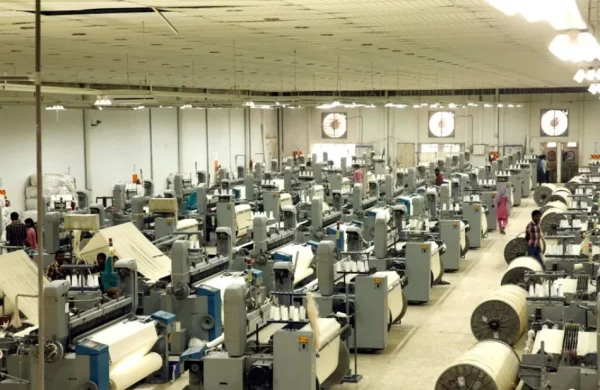
According to trade body estimates, hundreds of industrial units in the ready-made garment (RMG) and textile sectors have ceased production over the past few years.
Stakeholders state that while global market conditions, rising production costs, and economic pressure are factors, the banking sector’s stringent policies have become a primary cause.
Showkat Aziz Russell, president of the Bangladesh Textile Mills Association (BTMA), claims that approximately 350 readymade garment factories have already closed, and over 50 textile mills have been forced to stop production.
At a recent roundtable organized by the Centre for Policy Dialogue (CPD) in the capital, he said: “Each of these textiles represents an investment of Tk1,000 crore. It’s not just a problem for one factory—it is alarming for the entire industrial sector.”
Businessmen complain that banks often opt for temporary measures like loan rescheduling instead of finding long-term solutions for distressed industries.
Russell further said: “We always view loan rescheduling as an easy fix. Banks reschedule to clean their balance sheets, but it doesn’t solve the actual problem.”
According to him, banks often reschedule loans for six months or a year but fail to provide the necessary working capital or refinancing required to resume production. Consequently, while they gain temporary time, the core issue persists.
Rescheduling alone is not enough. It must be accompanied by refinancing; otherwise, sustaining industrial units will be difficult, he added.
Massive investments stagnated by small debts
Entrepreneurs emphasize that bank support is vital for operating industrial plants. Large-scale industries, in particular, require regular working capital and banking facilities.
One textile entrepreneur noted: “Suppose a factory has an investment of a Tk1,000 crore. The bank loan might be Tk150 crore or Tk200 crore. If that loan defaults for any reason, the bank cuts off all facilities, making it nearly impossible to keep the factory running.”
In many cases, if an industrial unit shuts down, the bank also fails to recover its full amount. Conversely, if the factory remained operational, there would be an opportunity to repay the debt gradually.
Despite high inflation and economic instability, the country’s banks have collectively made significant profits. An experienced garment businessman shared that over the last 20 years, banks collected at least Tk20 crore in profit/charges from his factory. However, during a crisis, he failed to secure even Tk3 crore from the bank to pay worker wages and allowances.
Mohiuddin Rubel, former director of BGMEA, said: “The banking and insurance sectors in this country expanded centered around thousands of garment factories. Banks constantly earn commissions from the RMG sector—opening LCs, various transactions, or loan disbursements. Along with high interest rates, there is the pressure of additional commissions, creating a ‘double-edged sword’ situation.”
“Almost every garment company has a partnership-like relationship with a bank. While banks regularly profit from these factories, support is often unavailable when the factories face a crisis. There are instances where a Tk200-crore factory shut down due to a debt of only Tk5 crore.”
He claimed that while it is often said loans are rescheduled for the benefit of businessmen, in reality, banks do it to lower their reported default loan rates.
Each garment and textile factory employs hundreds to thousands of workers. Consequently, when a factory closes, a massive number of workers lose their jobs.
Businessmen say that hundreds of closed factories have left a vast number of workers unemployed, increasing social and economic pressure.
Bankers argue they must follow regulations for debt recovery. If an institution fails to repay loans for a long period, there is no choice but to classify it as a defaulter.
One banker, requesting anonymity, said: “Banks have accountability. Loans are disbursed using depositors’ money. Therefore, if loans aren’t repaid, the bank must take action.”
However, he admitted that if an industrial unit remains operational, the chances of debt recovery are often higher.
An economist suggested: “If a large industrial unit faces temporary problems, efforts should be made to keep it afloat. Because if it closes, investment, employment, and production are all damaged.” He believes that beyond rescheduling, refinancing, interest restructuring, and long-term rehabilitation plans are necessary.
Finance Minister Amir Khasru Mahmud Chowdhury stated that all industrial factories closed after August 5, 2024, will be reopened.
Bangladesh Bank governor Md Mostaqur Rahman said: “Some factories closed earlier, and some more after August 5, 2024. We are prioritizing how to bring these factories back into production. We are asking banks to provide support so they can resume production, repay bank dues, and contribute to growth. Otherwise, factory assets will deteriorate daily, and banks will not get their money back.”





Editor & Publisher: Golam Mostafa Jibon
News & Commercial Office:
Railgate, Sirajganj & 2 R. K Mission Road, Dhaka.
Hotline: 01715-319996, 01558-314179
E-mail : [email protected]