

EC to redesign domestic postal ballots
- Update Time : Sunday, January 18, 2026

TDS Desk:
Election Commission (EC) has decided to change the design of postal ballots for the upcoming national polls to be used within the country, following objections raised by BNP.
Under the revised format, domestic postal ballots will display the names of final candidates alongside their electoral symbols. The design of postal ballots sent to expatriate voters will remain unchanged.
The decision was taken at a meeting of the commission on Friday night.
Under the existing election rules, postal ballots are required to display all electoral symbols, with voters instructed to cast their votes by placing a tick or cross in a blank box next to the chosen symbol.
However, BNP has alleged that the placement of party symbols on the postal ballot was uneven, claiming that those of several political parties were positioned prominently on the first line, while BNP’s name and symbol were placed in the middle. The party argued that once the ballot is folded, its symbol may not be clearly visible.
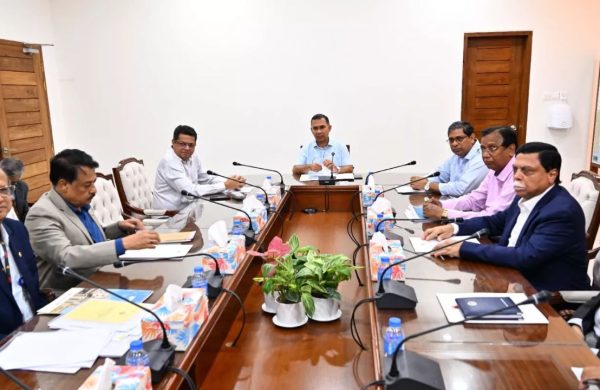
On Thursday, a BNP delegation led by Standing Committee member Salahuddin Ahmed met Election Commission and said the existing postal ballot design was causing disadvantage to the party.
BNP leaders urged the commission to include the candidates’ name and symbol on domestic postal ballots.
Following the meeting, the commission decided to move ahead with changes to the design of postal ballots used inside the country.
Election Commission officials said a meeting was held at the commission on Friday to discuss proposed changes to the design of postal ballots. The discussion also focused on the practical challenges involved in printing ballots under the revised format.
Officials from the Government Printing Press told the meeting that once the names and symbols of final candidates are provided, printing the postal ballots would take between three and five days.
The four election commissioners later met the chief election commissioner in his office, where the decision to revise the postal ballot design was finalised.
Election Commissioner Abdur Rahmanel Masud said the commission had decided that postal ballots for voters registered within the country would include the candidate’s name alongside the electoral symbol.
According to the parliamentary election schedule, the list of final candidates will be published on 20 January, while symbols will be formally allocated on 21 January.
Election officials said work on postal ballots would begin immediately after that.
Once printed, the postal ballots will be sent to voters under the supervision of the postal department and later returned to the returning officers through the same channel.
The newly introduced postal ballot system for expatriate voters has come under intense scrutiny after videos circulated widely on social media showing multiple ballots being counted inside private residences in Bahrain, Oman, Kuwait and Saudia Arabia.
The footage has triggered widespread political controversy, raising serious questions about the transparency, security, and credibility of overseas voting ahead of the 13th parliamentary elections.
The viral clips prompted BNP to approach Election Commission twice in two days, alleging irregularities and procedural flaws in the preparation and distribution of postal ballots.
EC however, has categorically rejected the allegations, insisting that the system has been designed with multiple layers of verification and that there is no scope for electoral fraud.














Editor & Publisher: Golam Mostafa Jibon
News & Commercial Office:
2 R. K Mission Road, Dhaka & Railgate, Sirajganj.
Hotline: 01715-319996, 01558-314179
E-mail : editor.thedailysky@gmail.com
news.thedailysky@gmail.com