

Most of Chittagong port containers move by road, raising costs and delays
- Update Time : Monday, December 15, 2025

Ctg Correspondent:
Chittagong Port handled 3.29 million twenty-foot equivalent units (TEUs) of containers in FY 2024–25, with as much as 96 percent transported along the Dhaka–Chittagong highway. Only 3 percent of the containers were moved by rail, while inland waterways accounted for just 1 percent. Despite being the country’s main container transport artery, the Dhaka–Chittagong highway falls short of the required standards. Although it is four-lane, the road is now carrying traffic well beyond its capacity. Many sections are riddled with potholes, there are no dedicated lanes for slow-moving or non-motorised vehicles, and numerous markets and residential structures line the highway. As a result of excessive traffic pressure, infrastructure limitations, and poor management, freight transport on the corridor takes longer, pushing up logistics costs.
According to data from Ministry of Road Transport and Bridges, congestion has increased freight transport costs on the Dhaka–Chittagong highway by as much as 35 percent. Businessmen say that to keep the country’s import and export activities moving smoothly, the highway needs to be expanded to at least eight lanes. Although the previous Awami League government initiated steps to widen the road toward the end of its tenure, the plan stalled at the feasibility study stage. Meanwhile, the interim government has also shown little appetite for investment in upgrading the highway as it approaches the end of its term.
Over the past 12 years, around BDT 35 billion has been invested in developing the Dhaka–Chittagong highway, enabling its expansion from two to four lanes in 2017. However, stakeholders say this investment has been far from adequate. During the same period, far larger sums were spent on less critical corridors. The Mawa–Bhanga Expressway was built at a cost of around BDT 110 billion, the Dhaka–Tangail highway was expanded to four lanes for BDT 61.68 billion, nearly BDT 170 billion is being invested in the Tangail–Rangpur highway, and another BDT 170 billion is being spent on expanding the Dhaka–Sylhet road.
Not only freight transport, but pressure from passenger vehicles has also been rising steadily on the Dhaka–Chittagong highway. Taking this into account, Roads and Highways Department (RHD) launched a feasibility study in April 2023 to explore expansion options. A consortium of five firms, led by Australia-based consultant SMEC, was appointed for the study. The findings suggested upgrading the highway to six or eight lanes, with an estimated cost of around BDT 730 billion. However, no development project was approved under the Awami League government following the study.
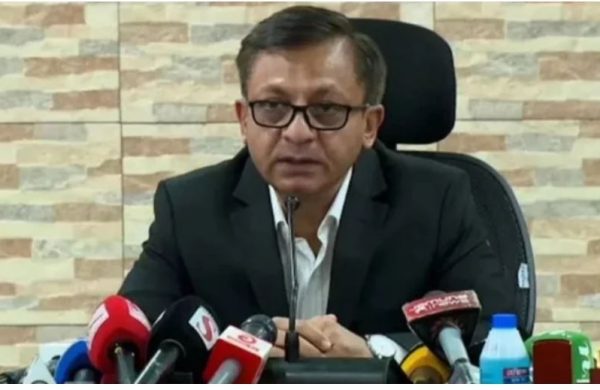
Although the current interim government acknowledges the strategic importance of the highway, it is reluctant to commit to large investments at this stage. Responding to a query, Road Transport and Bridges Adviser Muhammad Fauzul Kabir Khan told journalists, “We have only two months left. During this time, we have no plans for a major investment on the Dhaka–Chittagong highway. This will be the responsibility of the next government.”
He added that while there are plans related to the highway, the government is working on a comprehensive master plan integrating road, rail, and waterways nationwide. “Instead of relying solely on roads, we are preparing a master plan to use all modes of transport in a coordinated manner. We are identifying constraints in different sectors and incorporating effective solutions into the plan,” he said.
Engineers at the Roads and Highways Department noted that traffic volumes on the Dhaka–Chittagong highway far exceed its designed capacity. Large numbers of houses and markets still line the corridor, and there are no separate lanes for slow-moving or non-motorised vehicles. Various obstacles continue to hamper smooth movement along the highway, they added.
Business leaders say multiple bottlenecks have made cargo transportation along the Dhaka–Chittagong Highway increasingly costly. Speaking to journalists, Mohammad Hatem, president of the Bangladesh Knitwear Manufacturers and Exporters Association (BKMEA), said, “The Dhaka–Chittagong Highway is the lifeline of Bangladesh’s economy. Traffic congestion on this critically important corridor has become a routine affair. As a result, there is daily wastage of both working hours and money. When an eight-lane highway was needed, it was expanded to only four lanes. Now, neither four lanes nor even eight lanes is sufficient. What is required is an elevated expressway, which should connect Savar, Ashulia, Gazipur, and Narayanganj. In addition, the railway container terminal must be relocated from Kamalapur to Dhirashram as soon as possible, and the Pangaon Port must be made operational — something that has not happened over the past 12 years.”
As part of the formulation of Bangladesh’s National Integrated Multimodal Transport Master Plan, a seminar was held on Sunday at Sarak Bhaban in Dhaka. The seminar noted that nearly 70 percent of the country’s national highways lack the essential features required of such roads. The average speed on national highways is around 30 kilometres per hour, while the poor condition of roads is pushing up transportation costs.
The keynote paper presented at the seminar said that around 31.72 million twenty-foot equivalent units (TEUs) of containers are currently transported annually along the Dhaka–Chittagong Highway, accounting for 96 percent of container movement from Chittagong port.
Planning Adviser Dr. Wahiduddin Mahmud attended the seminar as the chief guest. Referring to the country’s roads being in poor condition due to weak maintenance practices, he said, “We spend a lot on roads, but the quality of maintenance does not match that spending. Many new road projects have been taken up, but we fail to properly maintain existing roads. Even light rain necessitates repairs, and during floods, the situation becomes much worse.”
Emphasising the need to decentralise the transport system rather than relying solely on roads, the adviser added, “Driven by political or commercial interests, we have prioritised roads while neglecting cheaper rail and river routes. Our railways and inland waterways must be overhauled. Greater use of rail and river routes must be ensured as alternatives to road transport for cargo movement.”
Presentations at the seminar highlighted the master plan’s baseline assessment study and strategic roadmap, identifying major challenges in the transport sector. These include excessive dependence on roads, congestion, safety concerns, high logistics costs, and the underutilisation of railways and inland waterways. The proposed framework places emphasis on multimodal integration, hub-and-spoke connectivity, linkages with ports and economic zones, coordination of urban transport, and the phased implementation of the master plan.







Editor & Publisher: Golam Mostafa Jibon
News & Commercial Office:
2 R. K Mission Road, Dhaka & Railgate, Sirajganj.
Hotline: 01715-319996, 01558-314179
E-mail : editor.thedailysky@gmail.com
news.thedailysky@gmail.com