

No jobs despite having degree: Anxiety in millions of unemployed graduates
- Update Time : Saturday, August 8, 2026
TDS Desk:
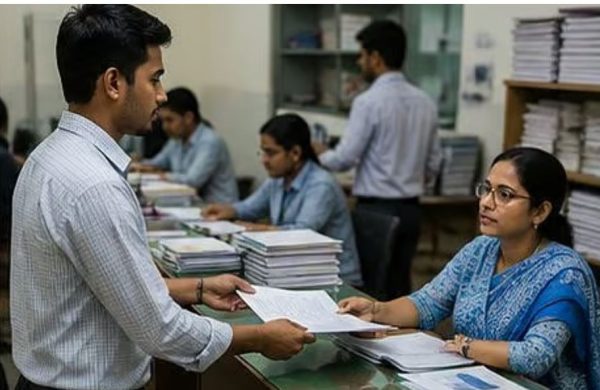
“Where do you see yourself in five years?” When an interview board asks the question, the candidate gives a brief reply: “Sir, I would be happy if I could simply pay next month’s mess rent for now.”
Although the joke has become popular on social media, it reflects the grim reality facing millions of highly educated unemployed people in the country.
After earning a degree, young people now worry more about meeting their monthly living expenses than pursuing long-term professional ambitions.
The latest Labour Force Survey by the Bangladesh Bureau of Statistics (BBS) provides statistical evidence of this reality.
According to the data, the unemployment rate among highly educated people or university graduates currently stands at 13.54 per cent, the highest among all educational groups. In total, around 885,000 graduates in the country remain unemployed.
By contrast, the unemployment rate among people with no formal education is only 1.25 per cent. In other words, the higher the level of formal education in Bangladesh, the greater the risk of remaining unemployed.
These statistics are not merely figures on paper; they are putting increasing pressure on people’s everyday lives. Take Asif, a former student of Jagannath University, who lives in a mess in Narinda, Old Dhaka.
Two years after completing his graduation, he still spends each day worrying about finding a job and paying his mess rent. In another part of Dhaka, Tanvir, who lives in a mess in Rajabazar, struggles to cover commuting costs and other essential daily expenses.
Meanwhile, Rony travels between Rangpur and Dhaka to sit for recruitment examinations while staying in a mess in Rangpur.
He is already two months behind on his mess rent, and the local grocery shopkeeper has added his name to the credit ledger.
Experts say these three young men represent only a fraction of the millions of unemployed youths in the country.
Although educational institutions produce an average of around 700,000 graduates every year, the formal job market creates only about 300,000 jobs.
An analysis of statistics from the Bangladesh Public Service Commission (BPSC) shows that candidates generally take three to five years to progress from the preliminary examination to final recruitment recommendations for the Bangladesh Civil Service (BCS) or combined bank recruitment.
This prolonged wait also creates age and experience barriers to entering the private sector.
Professor Ridhwanul Haq of the Institute of Business Administration (IBA) at the University of Dhaka has identified the mismatch between educational qualifications and labour-market demands as one of the major problems.
He said, “In the era of AI, formal employment opportunities will shrink in various fields, from media to accounting. However, opportunities for technically skilled workers will remain, and demand for such skills will increase significantly in the future. Therefore, we must bring technical education in the country up to international standards and increase the use of technology.”
At the same time, the country needs to take immediate steps to address the crisis facing young people.
Students in Bangladesh often spend three to four years after graduation preparing solely for examinations for specific government or major corporate jobs.
To overcome this rigidity, they should engage in internships, part-time employment or skill-based projects while studying or immediately after graduation.
Starting any kind of work can help young people overcome their reluctance to enter the workforce and may eventually open the door to a broader career.
Data from the International Labour Organization (ILO) and other global indicators show that the unemployment rate among young people aged 18 to 24 in Bangladesh stands at 9.39 per cent.
Economists at the Centre for Policy Dialogue (CPD) and the World Bank say that a lack of appropriate skills leaves billions of dollars’ worth of human resources underutilised every year.
As highly educated young people remain unemployed for prolonged periods, Bangladesh is losing the benefits of its crucial “demographic dividend”, with the estimated loss amounting to several billion dollars a year in terms of national GDP growth.
Career experts say discussions on policy reforms and changes to the education curriculum may take years, but thousands of young people across the country are currently spending their days struggling simply to survive each month.
As they try to balance mess rent with recruitment examination application fees, a significant portion of an entire generation’s talent and youth remains trapped in a cycle of uncertainty.






Editor & Publisher: Golam Mostafa Jibon
News & Commercial Office:
2 R. K Mission Road, Dhaka & Railgate, Sirajganj.
Hotline: 01715-319996, 01558-314179
E-mail : editor.thedailysky@gmail.com
news.thedailysky@gmail.com