

RTI: Awareness rises, but fear and institutional gaps hinder access
- Update Time : Tuesday, September 29, 2026
More than 850 hearings remain pending as Information Commission stays ineffective
Staff Reporter:
Public awareness of Bangladesh’s Right to Information (RTI) law has increased to some extent, but significant gaps remain in its practical use, with fear of retaliation, institutional weaknesses and reluctance among designated officials to provide information in writing continuing to discourage citizens.
As many as 72.4 per cent of citizens surveyed said they do not have adequate access to the information they need, up from 68.3 per cent in 2019.
Speakers made the observations at a day-long Right to Information Conference organised by the Right to Information Forum at The Daily Star Centre in the capital on Tuesday, marking International Right to Know Day 2026.
Journalists, RTI activists, government officials, NGO representatives and members of civil society from across the country attended the conference.
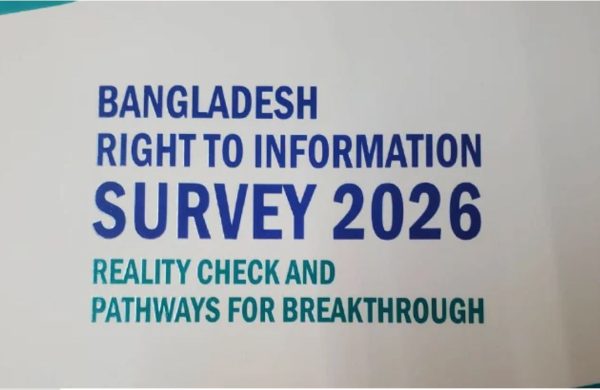
Presenting the findings of the “Bangladesh Right to Information Survey 2026”, Dr Anannya Raihan said the survey analysed citizens’ information needs, awareness, experience in using the RTI law and the role of information-providing authorities between 2019 and 2025.
According to the survey, major areas of public demand for information include employment, development projects, social services, education, government initiatives, agriculture and government allocations.
However, 72.4 per cent of respondents said they lacked access to the information they needed.
Dr Raihan said the “fear of retaliation” was one of the major barriers to using the RTI law despite the existence of a demand for information. Institutional capacity constraints and reluctance among designated officials to provide detailed information in writing were also significant obstacles.
Marginalised communities, he said, faced discrimination and limited access to information and often had to rely on intermediaries.
Awareness rises, but knowledge of procedures remains low
The survey found that awareness of the RTI law increased from 7.7 per cent in 2019 to 10.5 per cent in 2025.
Awareness was higher among urban residents, at 12.4 per cent, compared with 9.7 per cent in rural areas. The rate was around 18.5 per cent among young people and nearly 38 per cent among graduates.
However, there remains a substantial gap between knowing about the law and knowing how to use it.
Only slightly more than 8 per cent of those who were aware of the law knew the procedure for seeking information. Only 9.3 per cent knew the relevant time limits.
There was also considerable confusion over the appeal process. Some 46 per cent of respondents believed that a union parishad chairman would settle an appeal, while only 19.9 per cent correctly identified the Information Commission as the relevant authority.
Dr Raihan said social media had emerged as an increasingly important source of awareness about the RTI law, while civil society organisations played the least significant role.
He also said designated information officers generally had some awareness of the law, but there were major gaps in their detailed and comprehensive understanding of its provisions.
More than 850 hearings remain pending
MRDI Executive Director Hasibur Rahman said more than 850 hearings were currently pending because the Information Commission had not been functioning effectively.
After the formation of a new commission, strategic measures would be required to dispose of the pending hearings quickly, he said, adding that new applications and hearings should also be settled within the stipulated time.
He also called for an increase in the status of information commissioners, saying there was a demand for placing their rank above that of the cabinet secretary to ensure effective functioning of the commission.
Call for an independent, merit-based commission
Dr Iftekharuzzaman, executive director of Transparency International Bangladesh (TIB), said the next Information Commission should be able to function independently and free from influence.
Public confidence in the commission would not be restored unless appointments were made on the basis of merit rather than political considerations, he said.
He also said the commission should not become a “rehabilitation centre” for retired bureaucrats.
On proposed amendments to the RTI law, Dr Iftekharuzzaman said the right to information should not be conflated with efforts to control misinformation, disinformation or fake information.
There could be separate laws or mechanisms to address misinformation, he said, but restricting access to information in the name of controlling false information would undermine people’s right to know.
RTI law underused in major corruption cases
Dr Raihan said one of the principal objectives of the RTI law was to reduce corruption and ensure accountability through access to information.
However, questions remain over how extensively the law has been used to investigate major corruption cases and irregularities in large development projects, he said.
Barrister Sara Hossain, honorary executive director of BLAST, said although public interest in the RTI law existed, the survey did not show significant demand for information concerning crime, the justice system and violations of rights.
Fear and reluctance to take risks could be among the reasons, she said.
Marginalised, poor and powerless people were still unable to make effective use of the RTI law, she added.
“If people fear facing further harassment or rights violations while seeking remedies for injustice or rights violations, they will be reluctant to ask questions,” she said.
Sara Hossain said only 49 per cent of designated information officers had received training, while 64 per cent had not received a single information request.
She stressed the need to strengthen the capacity of designated officers to receive applications and provide information.
She also called for the Information Commission to be made functional immediately instead of waiting for legal reforms, saying people had been facing obstacles in exercising their rights for more than two and a half years in the absence of an effective commission.
According to the survey, 38 per cent of commission decisions had not been implemented, she said.
‘People need to demand more information’
Shaheen Anam, executive director of Manusher Jonno Foundation, said public interest in seeking information had not increased as much as expected since the RTI law was enacted in 2009.
Although there had been some improvement compared with 2019, the progress was still inadequate, she said.
The fact that 64 per cent of designated officers had never received an information request was particularly concerning, she added.
According to Shaheen Anam, NGO-led initiatives encouraging people to seek information had produced positive results, particularly among marginalised communities, who became more empowered and confident after gaining access to information.
She said greater public awareness and interest were needed to increase the use of the RTI law.
The law had also been underused in seeking information on corruption, embezzlement, money laundering and unusually high costs of major projects, she said, identifying fear as a major factor.
At the local level, parents, NGOs and civil society organisations often feared adverse reactions from authorities and possible personal consequences when seeking information, she added.
Call for proactive disclosure of information
Mohammad Shah Alam, secretary of the Information Commission Bangladesh, said the country had once suffered from a shortage of information but was now facing an abundance of information, along with the rapid spread of misinformation and false information.
This had created challenges for public life, personal safety and dignity, he said, adding that people now increasingly wanted verified and reliable information.
While progress had been made in implementing the RTI law, significant gaps remained, Shah Alam said.
The law could not become fully effective unless citizens actively sought information and demanded transparency and accountability, he said.
“Alongside the supply of information, the demand for information must also be strengthened,” he added.
Dr KM Mamunuzzaman, director of the NGO Affairs Bureau, said the right to information was a fundamental pillar of good governance.
If government offices proactively disclosed necessary information, citizens’ right to information would become more firmly established, he said.
He also stressed the need to make information more accessible through digitalisation and to raise public awareness of citizens’ rights.
Various sessions of the conference discussed the need to amend the RTI law, the importance of e-governance and proactive disclosure of information, and the incorporation of RTI into NGO activities and local governance.
Representatives of the Information Commission, government agencies, NGOs, the media and civil society took part in the discussions.








Editor & Publisher: Golam Mostafa Jibon
News & Commercial Office:
2 R. K Mission Road, Dhaka & Railgate, Sirajganj.
Hotline: 01715-319996, 01558-314179
E-mail : editor.thedailysky@gmail.com
news.thedailysky@gmail.com