

Villages sweat amid lengthy power cuts
- Update Time : Wednesday, April 22, 2026
TDS Desk:
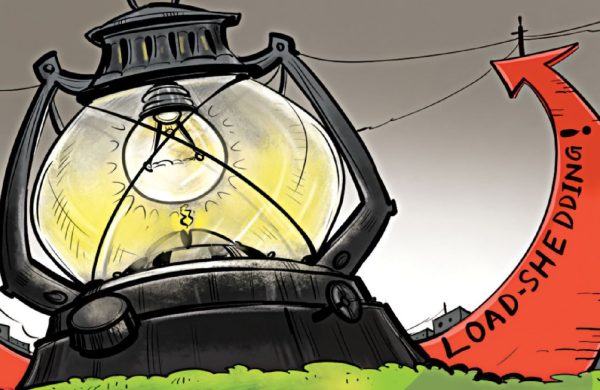
Power cuts across the country, especially in rural areas, have worsened with the mercury rising, as the government struggles to meet even off-peak demand due to shortages of gas, coal, and furnace oil to generate enough electricity.
Peak-hour shortages have exceeded 1,500 megawatts (MW) daily this week, similar to last week. With this shortfall, some areas are experiencing on average two to three hours of outages, though distribution companies say rural areas are suffering far longer power cuts.
Consumers under the Bangladesh Rural Electrification Board (REB) are reporting five to six hours of power cuts daily.
Yesterday, daytime peak demand reached 15,500MW at noon, against a generation of 14,069MW, leaving a shortfall of 1,462MW.
The shortage exceeded 1,000MW almost every hour yesterday, peaking at 1,840MW at 9:00pm. The Power Development Board forecast a shortfall of 2,932MW at midnight yesterday, showing that demand is going unmet even at night.
The average shortfall this week stood at 1,067MW, sharply up from 343MW last week and 358MW in the first week of April.
Data shows rural areas in Khulna, Mymensingh, Rajshahi, Rangpur, and Cumilla have faced the most severe cuts, with shortfalls exceeding 200MW in these regions.
Fuel constraints have led at least 71 of the country’s 143 power plants to either remain idle or produce well below their capacities, said power sector officials. They said 45 of them run on furnace oil, 23 gas, and three are coal-fired plants.
An internal analysis by the Power Development Board states that it needs at least 1,200 Million cubic feet per day (MMcf/d) of gas to run power plants during the summer peak, with a projected demand of 18,500MW. The PDB’s gas need is subject to coal‑fired and furnace oil plants generating expected electricity.
In the first week of April, reported that gas supply to the power sector stands at 900 MMcf/d, allowing PDB to produce up to 5,200MW. The supply was expected to drop further as the government decided to restart at least two fertiliser factories.
RURAL HARDSHIP DEEPENS
Persistent outages are severely disrupting daily life in rural Khulna, where residents report three to five hours of cuts daily, with conditions worse in Batiaghata, Dacope, Dumuria, and Koyra.
SSC examinees are among the worst affected.
“For the past week, power cuts have been occurring almost every evening from dusk until around 8:30pm. It is seriously hampering my studies,” said Trina Bairagi, an SSC candidate from Chaksholmari village in Batighata.
Her mother Tripti Bairagi added that their shrimp farm is at risk. “If we cannot run aeration machines due to power cuts, the shrimp will be damaged. In this heat, prolonged outages could wipe out the entire stock,” she said.
However, official data from the West Zone Power Distribution Company Limited shows only marginal shortfalls of around six to seven MW in recent days.
In Rajshahi, where temperatures reached 39.5 degrees Celsius, residents reported multiple outages daily, often lasting one to two hours, disrupting sleep, work and irrigation during the crucial Boro season.
Officials said supply is falling short by up to 30-40 percent in some rural zones.
In Mymensingh, supply was 750MW against a demand for around 1,075MW, leaving a deficit of up to 325MW. This has resulted in four to five hours of daily outages, nearly double in rural areas.
In Rangpur, rural consumers say the crisis has become unbearable.
Mahibur Rahman of Milonpur village in Mithapukur upazila said the heat has become intolerable without electricity, noting that supply often lasts only a few hours a day.
His son, SSC examinee Shariful Islam, added that studying at night has become nearly impossible due to outages and the stifling heat.
Sirajul Islam of Mahipur village in Gangachara upazila said his sleep has been disrupted for a week, as electricity is available for only five to six hours in total over 24 hours.
Monirul Islam, a schoolteacher from Lalmonirhat town, said outages have worsened since Sunday. While daytime cuts can be endured, he described the repeated night-time blackouts as unbearable.
In Rangpur city, electricity is unavailable for hours at a stretch, forcing shops, markets and small businesses to rely on generators.
Businessman Solaiman Ali of Payra Chattar said the added costs are hurting livelihoods, while the noise of generators has weighed heavily on the city’s roads.
Khurshid Alam, General Manager of Rangpur Rural Electricity Association, acknowledged the hardship. “This suffering is not only in Rangpur; there is an electricity crisis across the country. People are calling and telling us about their suffering. There is no electricity at my house either.”
Ashraful Islam, chief engineer of Rangpur NESCO, said that on Monday night, demand in Rangpur city and surrounding areas was around 75MW, while supply averaged only 45MW.
Prof M Shamsul Alam, energy adviser to Consumers’ Association of Bangladesh, said rural consumers are bearing a disproportionate share of the cuts.
“Loadshedding is distributed in a way that protects high-demand urban and commercial areas, while rural feeders are switched off for longer. Even a moderate national shortfall can translate into prolonged outages in villages due to how distribution is managed,” he said.
He added that a more balanced load management policy could ease hardship without increasing overall generation.
“A shortfall of around 1,500MW in a system of this size should not, by itself, lead to such extensive disruptions. The way load-shedding is distributed is a key factor behind the suffering people are facing,” he said.
DATA MISMATCH
Discrepancies in official data have added confusion.
REB recorded over 2,800MW of shortage at 7:00pm Monday, far higher than 1,840MW, the national figure reported for the same period.
Officials said such variations arise because demand is estimated, not directly measured.
“The national data is based on how much electricity can be generated in a given hour, not on actual demand,” said Prof Shamsul.
He explained that generation is regulated by fuel availability rather than demand, with load-shedding used to manage fuel consumption and costs.
Md Zahurul Islam, member (generation) of the PDB, said the ministry has formed a committee headed by PDB Chairman Md Rezaul Karim to examine the discrepancies. “REB’s claim does not seem logical,” he said.








Editor & Publisher: Golam Mostafa Jibon
News & Commercial Office:
2 R. K Mission Road, Dhaka & Railgate, Sirajganj.
Hotline: 01715-319996, 01558-314179
E-mail : editor.thedailysky@gmail.com
news.thedailysky@gmail.com