

13th National Election: Higher-education students emerge as five-million-strong voting bloc
- Update Time : Monday, December 15, 2025
TDS Desk:
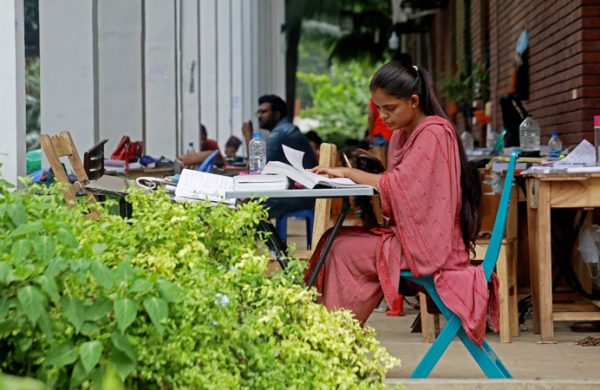
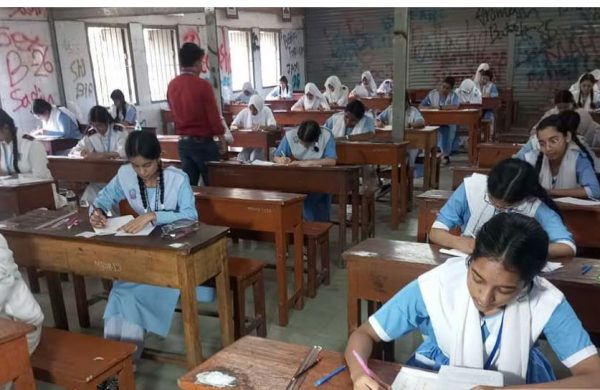
The schedule for the 13th parliamentary election sets February 12, 2026, for both the national poll and a referendum. Under the constitution, every citizen aged 18 or above has the right to vote. By that measure, almost all of the roughly 5.2 million students currently enrolled at undergraduate and postgraduate levels across universities and colleges are eligible to vote for the first time.
Many of these students played an active role in the 2024 mass uprising. In the period that followed, they were also vocal in pressing for reforms to the state and political system. That continuity of political engagement has carried into the run-up to the election, with strong interest visible among young voters.
According to the University Grants Commission’s annual report for 2023, total enrolment in higher education stands at 5,178,120, excluding foreign nationals. Of these, 296,063 study across the country’s 50 public universities. Another 4,524,469 are enrolled at the Open University and in colleges affiliated with various universities, while 357,588 attend private universities. University officials say overall numbers remain broadly unchanged, as seat capacity has not increased. Several surveys suggest these voters will weigh candidates’ competence, character and track records alongside party affiliation and symbols when casting their ballots.
Azizul Haque, a student at the Institute of Education and Research at the University of Dhaka, will vote for the first time. “University students are likely to play a significant role in this election,” he said. “Most are politically aware, and many seem inclined to judge candidates by their merit and performance. In the DUCSU election, students didn’t vote based on organisation alone. The same pattern could well emerge in the national poll.”
Conversations with students point to a shared set of priorities shaping their choices. These include economic conditions, rising living costs, job shortages and long-term security for young people. Farim Ahsan, general secretary of the Jahangirnagar University Debate Organisation, said voters his age were looking beyond party labels. “The political force that can show a credible path to jobs after graduation, skills development, economic stability, and youth participation in a digital and modern economy is more likely to win young voters,” he said. “At the same time, governance, freedom of expression, tolerance of dissent and the rule of law are becoming increasingly important. This time, young voters will place the future above symbols.”
Student union elections were held over recent months at four autonomous public universities, drawing strong participation. Official data show turnout of 78.33 percent in the Dhaka University Central Students’ Union election (DUCSU), 67 percent at Jahangirnagar University (JUCSU), 69.83 percent at Rajshahi University (RUCSU), and about 70 percent at Chittagong University Central Students’ Union (CUCSU). In each case, panel-backed candidates won more seats than independents.
Mohiuddin Khan, assistant general secretary of DUCSU, believes young voters will have an outsized influence on the national outcome. Speaking to journalists, he said, “University students are generally well informed about politics. They follow party activities closely and can also shape how people around them vote, starting with their own families. Where the majority of young votes go, public opinion is likely to follow.”
A review of past data shows that the number of voters enrolled in higher education is higher than in any of the previous four parliamentary elections. Compared with the ninth general election in 2009, the figure has almost quadrupled. At that time, the number of students in higher education stood at about 1.35 million.
Students also point to the presence of a referendum alongside the parliamentary vote as an added draw. It gives them a direct say on state reforms as well as the choice of representatives. Khan Muhammad Mamun, a student at North South University, said, “There hasn’t been a credible election in the country for 15 years, so expectations are naturally high. Students at today’s universities were at the forefront of the July uprising and remained vocal on reform afterwards. This vote is not only about electing representatives. It also opens a path, through the referendum, to reforming the basic structure of the state. That is why young people are taking it seriously.”
Alongside the surge in young voters, the number of younger candidates is also markedly higher in this election. Most of the nominees announced by the National Citizen Party (NCP) are young. Several figures who led the July uprising have also declared their candidacy as independents.
Political parties are placing particular emphasis on educated young voters. Muzahedul Islam Shahin, joint convener of the NCP’s central committee, said the party was making targeted pledges to that constituency. “We have a range of commitments to the youth,” he told journalists. “These include a modern technical education system, stream-based employment pathways, and exporting skilled manpower in line with global demand. We will also take specific measures for those who want to pursue serious research careers. The NCP itself is a new political party formed by young people who led the July revolution. That is why I believe young voters will favour these revolutionaries.”
Bangladesh Jamaat-e-Islami was the first party to publish a preliminary list of candidates ahead of the parliamentary election. Building on its student wing’s electoral success in DUCSU and other university student union polls, the party says it is fielding inclusive candidates this time, with a clear focus on young leadership.
Mia Golam Parwar, secretary general of the party, told journalists, “We view student voters as a source of youthful strength. We will introduce an integrated education system that combines ethics, technical skills and production-oriented learning so that no one remains unemployed after completing their studies. If elected, our government will ensure employment for every young man and woman. These plans are set out in our manifesto. The youth will be the real driving force of nation-building. We want to create conditions where everyone can apply their talent and skills to the fullest in the field they choose.”
He added that student voters had already signalled a desire for change in the four recent university student union elections. “We believe that sentiment will also shape how young people vote in the national election,” he said.
The Bangladesh Nationalist Party (BNP) is campaigning on a pledge to create 10 million jobs within 18 months of taking power and to introduce a one-year allowance for educated unemployed youth. Young voters are a priority group for the party. The party’s election slogan this time reads: “First vote of youth should go to the sheaf of paddy.”
Selima Rahman, a member of the BNP standing committee, said young people were reassessing the political landscape one year after the mass uprising. “Young voters are beginning to understand the real situation,” she said. “We are presenting a plan for rebuilding the country that reflects their aspirations for a new Bangladesh. We will work to implement it. I believe these commitments will draw young people towards the BNP and help deliver a better post-uprising Bangladesh.”
Political analysts note that educated youth and first-time voters now make up a substantial share of the electorate. Responding to their demands and expectations through timely policies and programmes has therefore become a major challenge for parties. For young voters, development no longer means infrastructure alone. Living standards, personal freedoms, and long-term security also matter. Many are expected to vote by weighing future prospects, quality of life and stability, rather than traditional party symbols or inherited loyalties.




Editor & Publisher: Golam Mostafa Jibon
News & Commercial Office:
2 R. K Mission Road, Dhaka & Railgate, Sirajganj.
Hotline: 01715-319996, 01558-314179
E-mail : editor.thedailysky@gmail.com
news.thedailysky@gmail.com