

500 more beds for Neurosciences Hospital, PM likely to open building
- Update Time : Friday, August 14, 2026
BSS, Dhaka
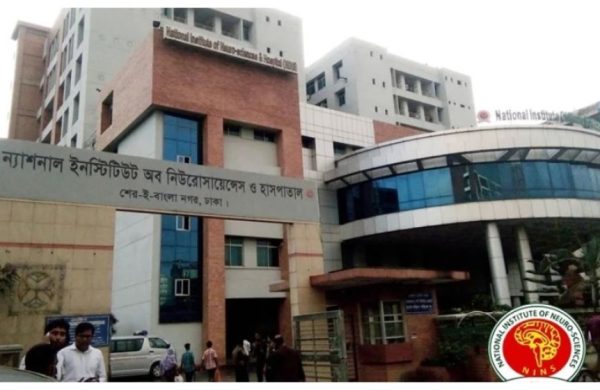
A new building with a capacity of 500 more beds will be inaugurated tomorrow at the National Institute of Neurosciences & Hospital (NINS) in the capital.
Prime Minister Tarique Rahman is expected to inaugurate the new building at 10 am tomorrow. Officials at NINS said the construction work on the new building has already been completed and most of the equipment has also been installed.
According to the them, Once the 15-storey building is inaugurated, the total number of beds at the hospital will increase to 1,000. As a result, it will become the largest specialised neurological treatment centre in the country.
Three floors below the building have been kept as basements. There is a parking area as well as a service section. The 12 floors above have wards, operation theatres and diagnostic units. There are also 40 ICU beds, 24 post-operative beds and 112 cabins.
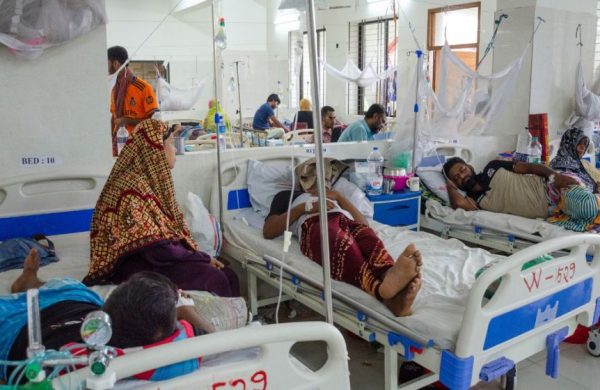
Doctors at the hospital said most of the patients who come here for treatment are stroke patients, followed by accident victims with brain and spinal cord injuries.
In addition, they said patients suffering from various neurological diseases, including Parkinson’s disease, dementia, GBS, epilepsy and hydrocephalus, seek treatment at the hospital.
Patients of all ages, from children to the elderly, receive treatment at the hospital for neurological diseases.
During a recent visit to the newly constructed building of the hospital, this correspondent found that the 15-storey NINS Unit-2, with three basements, is fully equipped with a central AC (air conditioning) system, the first such addition to any government medical centre in the country.
In addition, there is a 100-bed specialised trauma unit for those injured in road accidents, falls from high places or vehicle accidents. There is a 24-hour OT (surgical room) facility. Two of the four OTs are modular OTs (special types of operation theatres for performing surgeries in a sterile and controlled environment).
The state-of-the-art OTs, equipped with German technology, will reduce the risk of infection for patients undergoing surgery. Officials said there are usually challenges in transporting paralysed and head-injured patients. To reduce this risk, the new hospital building has escalators from the first to the third floors to facilitate the transfer of patients from one floor to another.
This is also the first such addition to any government hospital. There is a 40-bed ICU and a 20 bed HDU (High Dependency Unit), along with 62 ventilators. A cathlab, two MRI and two CT scan machines have been installed. There are also a modern autoclave (medical equipment sterilisation) machine, a solid waste disposal system for removing medical waste and a separate oxygen plant system.
NINS Director Prof Dr Mohammad Nuruzzaman Khan told BSS that Prime Minister Tarique Rahman is expected to inaugurate the new building tomorrow.
“When this building is inaugurated, 500 more beds will be added to the hospital,” he said.
Currently, many patients do not get the opportunity to be admitted to the hospital due to a shortage of beds. “After the inauguration, we will be able to provide world-class services to many more patients. Patients will no longer have to be turned away,” he said.
Dr Nuruzzaman said on October 23, 2006, the then Prime Minister, late Begum Khaleda Zia, laid the foundation stone of the National Institute of Neurosciences and Hospital with the aim of expanding medical services for neuro patients.
“On Begum Khaleda Zia’s birthday, her worthy son, Prime Minister Tarique Rahman, will open the new building of this hospital. This is a great achievement and a matter of pride for us,” he added.










Editor & Publisher: Golam Mostafa Jibon
News & Commercial Office:
2 R. K Mission Road, Dhaka & Railgate, Sirajganj.
Hotline: 01715-319996, 01558-314179
E-mail : editor.thedailysky@gmail.com
news.thedailysky@gmail.com