

Will anti-fascist forces act with caution now?
- Update Time : Sunday, December 21, 2025
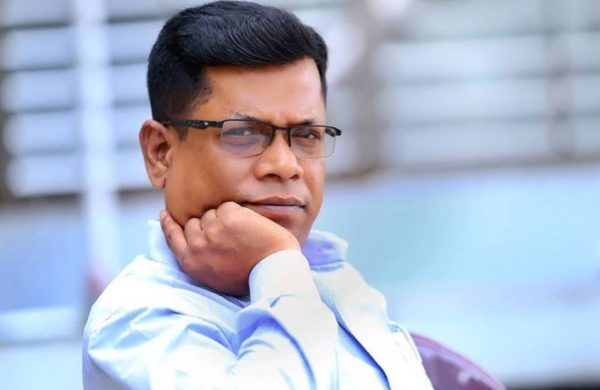
—Mostofa Kamal—
After the untimely death of Sharif Osman Hadi after being shot by an assassin, it should have become clear that greater caution was necessary. Only after the UN’s Volker Türk or Amnesty International spoke out did the realisation come that incidents were being engineered by exploiting cracks in unity.
Does one need to be an expert to understand this? Does one have to be a saint or spiritual leader? With eyes and ears even slightly open, could the partners in the movement to establish democracy not have understood this long before such tragedies occurred? Had they been cautious, they would not have become divided. They could have realised how they themselves were turning into each other’s opponents and creating opportunities for those who destroy democracy. If they wished, they could also have recalled the strong warning delivered by Army Chief General Waker-Uz-Zaman at the Rawaa Club’s Helmet Hall on 24 February this year.
In that speech, he said: “If you engage in mudslinging, fighting and violence among yourselves, the country’s independence and sovereignty will be endangered. Later, do not say I did not warn you.” He urged political parties, in the national interest, to forget their differences and work together. He said his sole desire was to leave the country and nation in a good place and return to the cantonment.
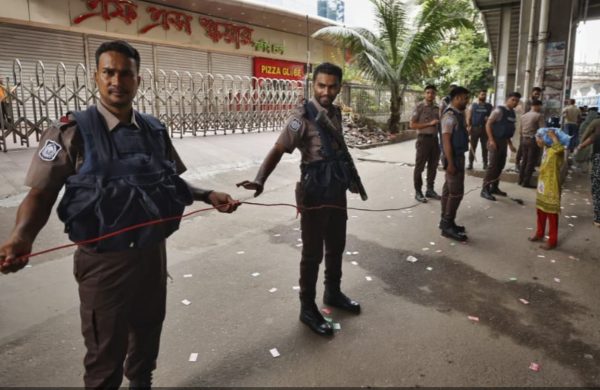
The sequence of events since then has now reached the killing of the fearless July movement figure Osman Hadi. Even they are divided into factions, one of which is Hadi’s Inqilab Mancha. In the wake of Hadi’s killing, the National Citizen Party (NCP), the largest organisation of July activists, cancelled its planned Shahbagh sit-in on Friday and instead held a protest from Banglamotor—an important and instructive decision.
The statements posted on verified Facebook accounts by NCP leaders Nahid and Sarjis, explaining the reasoning behind this decision, were particularly clear. Urging maximum caution after Friday prayers, they warned that July-opposing forces were planning vandalism and sabotage, adding: “We oppose all forms of violence. Please ensure that no one exploits public anger to carry out vandalism, arson or destructive activities.”
BNP, Jamaat, NCP and other stakeholders in the anti-fascist movement have, after losing Hadi, reached a largely common position amid harsh realities on the ground, recognising the urgency of unity. Jamaat-e-Islami Ameer Dr Shafiqur Rahman cut short his London trip and rushed home, visiting Hadi’s family straight from the airport and calling for unity beyond party lines. BNP also expressed concern, citing Hadi’s death and other incidents of violence, with Secretary General Mirza Fakhrul Islam Alamgir saying these brutal events show a vested group is trying to destabilise the country. UN High Commissioner for Human Rights Volker Türk has urged calm and restraint—warnings the army chief had already delivered on 24 February.
There are further reflections to consider. Some mocked July as “Jhuly”, while others plotted to extinguish the spirit of 2024 by 2025. Amid this, Inqilab Mancha spokesperson Osman Hadi, who had been shot in Dhaka, died in Singapore while receiving treatment. On the same day, within hours, the hanging body of NCP leader Jannat Ara Rumi was recovered in Jigatola. These followed earlier assaults on several NCP leaders across the country.
In a national address mourning Hadi, Chief Adviser Professor Muhammad Yunus urged patience and warned against rash actions. Yet the appeal went unheeded. After news of Hadi’s death was announced on Inqilab Mancha’s Facebook page on Thursday night, the country erupted in anger and unrest. Hadi had long voiced fears, warning that July frontliners would be isolated and not allowed to survive. He had even asked that his child be looked after if anything happened to him.
Osman Hadi was a distinctive figure—outspoken against injustice, a powerful protest voice in a short time, critical not only of fascism but also of BNP, Jamaat and NCP. He never belonged to Chhatra Dal, Shibir or any organisation, nor did he join NCP despite being a July movement front figure. A son of a poor family from Jhalokathi, he was religiously inclined, polite by nature and a fierce critic of traditional politics. His chapter closed with his death following the shooting after the election schedule was announced.
Comparable political upheavals occurred in Nepal and Sri Lanka, yet Bangladesh differs sharply in constitutional continuity. Nepal and Sri Lanka avoided the prolonged reform-versus-election debates, administrative upheaval and economic collapse seen in Bangladesh. Nepal quickly set an election date; Sri Lanka curbed corruption and stabilised without widespread violence. Their Gen-Z protesters acted with restraint and responsibility—unlike Bangladesh’s deeply divided landscape.
Bangladesh now faces intense political conflict not only over elections but over governance itself. Movement frontliners are insecure and targeted, and divisions have deepened within a year of the uprising. The situation bears resemblance to Tunisia after the Jasmine Revolution, where initial reforms led to weak governance, repeated government changes, economic decline and eventually a return to authoritarianism.
Whether Bangladesh will follow a similar path remains uncertain. Yet the caution shown by NCP on Friday offers a glimmer of hope. The rest remains to be seen.
—————————————————————————
Author: Journalist and columnist, Deputy Head of News, Banglavision








Editor & Publisher: Golam Mostafa Jibon
News & Commercial Office:
2 R. K Mission Road, Dhaka & Railgate, Sirajganj.
Hotline: 01715-319996, 01558-314179
E-mail : editor.thedailysky@gmail.com
news.thedailysky@gmail.com