

Price of Freedom and Moral Debt We Have Not Paid
- Update Time : Tuesday, December 16, 2025

—H M Nazmul Alam—
What do we want in Bangladesh today? It may sound like a simple question, yet it is a question that has weighed on our collective conscience for more than five decades. Every Victory Day returns with its familiar splendour of flags, parades and ceremonial tributes, but beneath the colour and pride lies an unsettling introspection. A nation that once fought with unimaginable courage to reclaim its dignity must ask itself again and again whether it has done justice to the price of that freedom. The story of Bangladesh is a story of triumph drenched in sacrifice. And yet, every year on 16 December, a moral unease follows us like a shadow.
The path to 1971 was not merely a political journey. It was a moral awakening of a people who realised they had nothing left to lose except their subjugation. In every village, every alleyway and every refugee camp, there existed a conviction that echoed Shelley’s timeless observation that “the real power lies in the unacknowledged legislators of the world.” The ordinary people of Bangladesh were precisely that. They legislated history not through pen and paper, but through courage, through hunger, through exile, and through lives placed willingly on the line.
We speak often of the battlefield exploits, the strategic brilliance of our leaders and the diplomatic manoeuvres in global corridors of power. Yet, the truest stories of the Liberation War lie in the quiet bravery of people whose names rarely appear in the epics of victory. The young farmer who ferried freedom fighters across the river under moonless skies. The elderly woman who hid two strangers in her granary knowing full well that a single whisper could have ended her entire family. The teacher who dug graves for his own village martyrs before fleeing across the border. These lives did not fit neatly into political grand narratives, but they are the moral architecture of Bangladesh.
The Liberation War was as much a cultural uprising as it was a military struggle. It was the triumph of the Bangali creative soul. When poets wrote their verses in trembling candlelight and singers carried songs across borders of fear, they were not merely creating art; they were defending the very idea of being human. Rabindranath Tagore, whose words were banned but whose essence could never be censored, reminded us that freedom is “the soul of the country’s consciousness.” The liberation struggle lived in the poetry of Shamsur Rahman, in the fiery orations of Zahir Raihan, in the brushstrokes that turned every wall into a page of defiance.
Yet as the years passed, something tragic happened. The war that once belonged to the people gradually became the property of political parties. History, which should have been an inheritance of all, became a battleground of selective memory. Victory was celebrated, but its moral meaning grew blurred. The War of Liberation had called for a collective conscience; instead, politics built walls among us, each claiming to be the true guardian of 1971. This fragmentation cost us dearly. It cost us truth. It cost us unity. Sometimes it even cost us our humanity.
Still, this is a nation that, despite all its flaws, surprises itself with resilience. The people who once toppled oppression in 1952, 1969 and 1971 have repeatedly shown that they do not sleep forever. July 2024 reminded us of this again. It was a reminder that Bangladesh’s cultural spirit never dies; it only waits.
Economically, Bangladesh has risen by sheer human determination. A war-ravaged land has become a major player in the global apparel market. Women, who lost so much in 1971, have since become the backbone of our industrial revolution. Technology has made our young population globally competitive. Poverty has declined; life expectancy has increased. Yet this progress exists side by side with institutional decay.
We are living in a time when elections are not trusted, when banks bleed from corruption, when money slips out of the country through shadowy networks, and when rule of law bends according to who sits in the chair of power. The administrative machinery has been coloured by partisanship for so long that it has forgotten how to function neutrally. People’s character, inevitably shaped by the environment they inhabit, has drifted towards opportunism and consumerism. The very system that was meant to uplift citizens has instead trained them to navigate power, not principle.
Plato warned in The Republic that when a society stops honouring virtue and wisdom, the state tilts towards decay. Bangladesh’s crisis, at its core, is not economic or diplomatic; it is moral. We have failed to build the kind of public character that independence demanded. Foreign policy, too, requires wisdom rather than romanticism. The geography of Bangladesh demands an understanding of India, not from emotional rhetoric but from historical reality. At the same time, relations with the United States require strategic clarity. To lean entirely towards one while antagonising the other is national folly. A sovereign state must navigate global powers with a clear, balanced understanding of national interest.
The political crisis we face today did not appear suddenly like a summer storm. It is the result of a long chain of unresolved tensions. From 1972 onwards, every government inherited a complex moral debt yet rarely fulfilled it. Today, as an Advisory Council of non-partisan individuals runs the state, the people appear strangely relieved, almost grateful for a pause from the familiar political chaos. The irony is striking. A country born out of heroic political struggle now finds its confidence in a non-political caretaker. This speaks not of strength, but of deep-seated mistrust.
Philosophy has always warned nations against forgetting. Nietzsche argued that forgetting history makes a people “dangerously shallow,” while remembering it selectively makes them dangerously arrogant. Bangladesh risks both. We forget the personal stories, the moral codes, the ethical commitments that shaped 1971. Yet we remember selectively the parts that flatter our preferred political narrative.
The young generation, however, is refusing to inherit this edited memory. They want a Bangladesh that is democratic not only in slogans but in spirit. They want an education system that produces thinkers, not merely test-takers. They want institutions that serve the public, not political masters. They want a society where truth does not tremble before authority. They want a future built on transparency, science, dignity and justice.
And so, the question returns. What do we want in Bangladesh today?
We want a state whose institutions cannot be purchased. We want banks that protect public money rather than private greed. We want courts whose judgments are not whispered in backrooms. We want education that teaches students not only how to earn but how to be ethical. We want a foreign policy that protects sovereignty without needless hostility. We want patriotism free of party flags. We want freedom that does not need anniversaries to be remembered. Above all, we want a new generation of citizens who demand truth even when it is inconvenient, who honour sacrifice without politicising it, who choose justice over advantage, who love Bangladesh not as a symbol but as a responsibility.
Victory Day is not the end of a struggle. It is the beginning of one. The struggle to remain honest, humane and united. The struggle to build institutions strong enough to protect the weak. The struggle to ensure that the blood of martyrs is not wasted in the everyday corruption of ordinary governance. Each 16 December should remind us not of what we celebrate but of what we owe. The graves of 1971 do not ask for flowers. They ask for a country worthy of their silence. They ask for citizens who refuse to look away. They ask for a future where freedom is more than a memory.
——————————————————————————
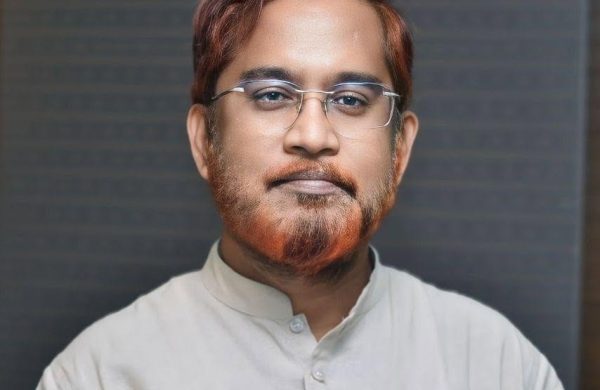
The writer is an academic, journalist and political analyst. He can be reached at nazmulalam. rijohn@gmail.com





Editor & Publisher: Golam Mostafa Jibon
News & Commercial Office:
2 R. K Mission Road, Dhaka & Railgate, Sirajganj.
Hotline: 01715-319996, 01558-314179
E-mail : editor.thedailysky@gmail.com
news.thedailysky@gmail.com