

Yanshan University: Engineering tradition meets a new era of innovation
- Update Time : Saturday, September 12, 2026
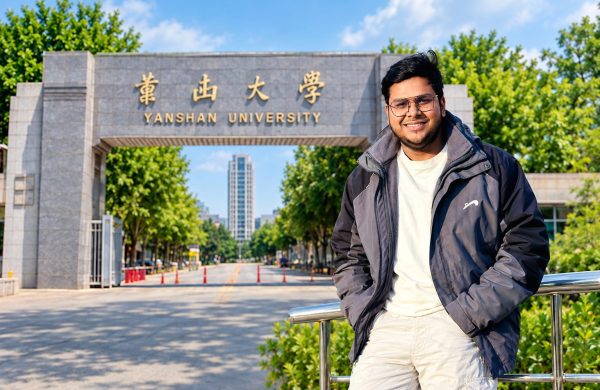
From a background in heavy industry to intelligent manufacturing systems—Yanshan University is advancing towards a more connected and sustainable future, drawing upon a century of experience in engineering.
By Md Anisur Rahman
On the coast of the Bohai Sea in Qinhuangdao, Hebei Province, Yanshan University has grown from an institution shaped by China’s heavy-industry era into a broad research university with a strong engineering identity. Its development mirrors a larger transformation in Chinese higher education: universities once organized around traditional machinery and manufacturing are increasingly combining those foundations with artificial intelligence, advanced materials, automation, sustainability, and international cooperation.
A Proud Engineering Heritage
The university’s history reaches back to Harbin Institute of Technology, founded in 1920. In 1958, heavy-machinery disciplines and related programs were moved to Fularji, an industrial district of Qiqihar in Heilongjiang Province, where a branch campus was formed.
In 1960, the institution became independent as the Northeast Heavy Machinery Institute under the former Ministry of Machinery Industry, earning designation as a national key institution of higher education in 1978. Between 1985 and 1997, the university relocated to Qinhuangdao, formally taking the name Yanshan University in 1997. That industrial lineage continues to define the institution’s culture, particularly in mechanical engineering, materials science, manufacturing, and equipment technology.
A Comprehensive Research University
Today, Yanshan University is jointly supported by:
The Hebei Provincial Government
The Ministry of Education
The Ministry of Industry and Information Technology
The State Administration of Science, Technology and Industry for National Defense
The university covers roughly 4,000 mu, hosting more than 36,000 students and about 3,200 staff members, including around 2,200 full-time faculty. Its academic ecosystem extends from undergraduate education through master’s and doctoral degrees to postdoctoral research.
Although engineering remains central, the university has expanded into a comprehensive academic hub covering nine broad fields: engineering, science, economics, law, education, literature, management, arts, and interdisciplinary studies. Out of its 60 undergraduate programs, 34 have been designated national first-class construction sites, and 19 engineering programs have achieved international engineering education accreditation.
Institutional Profile: Key Statistics — Professors: 538, Doctoral Supervisors: 551, Postdoctoral Research Stations: 12, First-Level Doctoral Disciplines: 14
Research Strength and Industrial Relevance
Research is where Yanshan University’s historical strengths shine brightest. Mechanical engineering and materials science remain its standout fields.
According to the university’s 2026 institutional profile, six fields rank within the top 1% globally in Essential Science Indicators (ESI):
Engineering (ranked within the top 1/1000th)
Materials Science
Chemistry
Computer Science
Environmental Science & Ecology
Physics
The university hosts national-level innovation platforms focused on metastable materials, lifting machinery, cold-rolling equipment, and advanced forming technologies. Researchers actively push boundaries in parallel robotics, fluid transmission, industrial automation, and structural materials for extreme conditions. Since 2000, the university has secured 22 national science and technology awards and undertaken over 2,000 national-level research projects.
Engineering for an Intelligent Era
Modern manufacturing demands more than stronger metals—it relies on data, intelligent control, sensors, predictive systems, and low-carbon production. Yanshan University is expanding into these critical domains with dedicated research centers for:
Artificial Intelligence & Robotics
Marine Science & Engineering
Health-Related Industrial Technology
Carbon-Neutral Science & Technology
”The next era of engineering will be defined not only by machines and materials, but by how intelligently they are designed, connected, and used.”
Integrating machine learning, computer vision, and digital twins allows the university to bridge physical manufacturing with digital intelligence, positioning its graduates at the forefront of modern industry.
A Global Outlook in a Strategic Location
International engagement forms another core pillar of Yanshan University’s strategy. The institution maintains partnerships with over 140 universities and research institutes across 30+ countries, facilitating exchange programs, joint degrees, and collaborative research.
Its location in Qinhuangdao—a major coastal city in northern China and part of the vibrant Beijing-Tianjin-Hebei economic cluster—offers students and researchers direct links between laboratory innovations and industrial application, surrounded by a rich historical landscape like the nearby Shanhaiguan Pass.
Looking Ahead
The primary challenge for Yanshan University is one shared by top technical institutions globally: preserving deep, traditional engineering expertise while rapidly adapting to digital and environmental shifts.
By continuing to blend its heavy-industry roots with artificial intelligence, advanced computation, and green technologies, Yanshan University is translating a century of industrial heritage into sustainable innovation for the modern world.
Fact-Check Note: Institutional facts are based on Yanshan University’s official school profile (updated July 2026) and its 2026 undergraduate admissions charter.
The writer is a student for the School of Information Science and Engineering. He is available on mdanisur821@gmail.com.









Editor & Publisher: Golam Mostafa Jibon
News & Commercial Office:
2 R. K Mission Road, Dhaka & Railgate, Sirajganj.
Hotline: 01715-319996, 01558-314179
E-mail : editor.thedailysky@gmail.com
news.thedailysky@gmail.com