

Collective action key to realising right to development: Shama Obaed
- Update Time : Thursday, September 24, 2026
UNB:
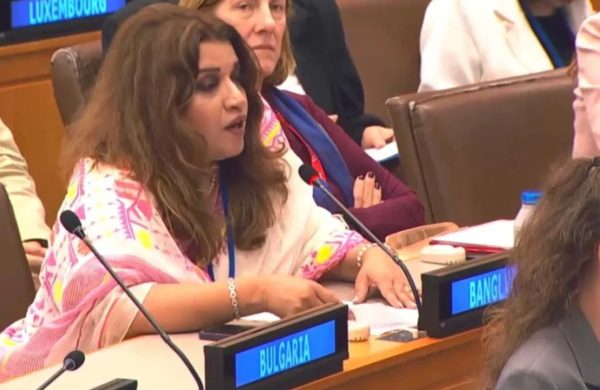
State Minister for Foreign Affairs Shama Obaed Islam said the realisation of the right to development demands commitment, responsibility and collective action from all nations.
She made the remarks while speaking at an event on the right to development held at UN Headquarters in New York on 23 September.
The event was convened by the president of the 81st Session of the UN General Assembly and Bangladesh Foreign Minister Khalilur Rahman during the high-level week.
It marked the 40th anniversary of the adoption of the UN Declaration on the Right to Development, which recognises development as an inalienable human right and calls for inclusive, sustainable and participatory development.
The state minister highlighted the government’s pro-people development agenda including the Family Card and Farmer Card initiatives.
She also underscored the role of women and youth as partners in development and the vision of a “Rainbow Nation” where no one is left behind.
Shama Obaed proposed a few priorities that include a fairer global financial architecture, predictable and equitable development and climate finance, equitable access to technology and AI, and a legally binding framework to turn the right to development into accountability.
The event brought together Member States and stakeholders to reaffirm the right to development and advance shared prosperity, said the Ministry of Foreign Affairs.
Shama Obaed also represented Bangladesh at the annual ministerial meeting of the Women, Peace and Security (WPS) Focal Points Network held at the UN Headquarters in New York.
The meeting, convened by the Philippines, Italy and UN Women on the sidelines of the 81st session of the UN General Assembly, marked 25 years of UN Security Council Resolution 1325 on WPS and focused on strengthening its implementation and accountability.
Recalling Bangladesh’s pioneering role in supporting Resolution 1325 as an elected Security Council member in 2000, the State Minister reaffirmed Bangladesh’s commitment to women’s meaningful participation in decision-making.
She called for stronger women-led early warning and mediation, greater participation of women in peace processes, integration of WPS into climate and humanitarian action and stronger accountability for violations against women.
The State Minister highlighted ongoing efforts to develop Bangladesh’s second WPS National Action Plan.
She also presented the Dhaka Dialogue, a Bangladesh-led initiative addressing digital harassment and AI-enabled abuse against women, and invited Member States to join its forthcoming Group of Friends.
The meeting brought together Ministers and senior representatives from different countries to strengthen implementation of the UN WPS agenda and advance women’s leadership in peace and security.







Editor & Publisher: Golam Mostafa Jibon
News & Commercial Office:
2 R. K Mission Road, Dhaka & Railgate, Sirajganj.
Hotline: 01715-319996, 01558-314179
E-mail : editor.thedailysky@gmail.com
news.thedailysky@gmail.com