

Pay and allowance hikes beyond double could curb government’s fiscal space
- Update Time : Thursday, January 22, 2026

TDS Desk:
The Ninth National Pay Commission submitted its report to the chief adviser on January 21, recommending salary increases of 105 percent for the highest grade and 142 percent for the lowest grade of government employees. It proposes raising the entry-level basic salary from BDT 8,250 to BDT 20,000, while the maximum basic pay would rise from BDT 78,000 to BDT 160,000. Implementing the proposed increases in pay and allowances would require an additional BDT 1.06 trillion from the state.
Government expenditure grows each year, even though targeted revenue collection fails to keep pace. Operational spending is rising steadily due to higher wage bills and interest payments on debt. Development expenditure, by contrast, is shrinking. Analysts warn that allocating more than BDT 1 trillion for a new pay scale would further strain the government’s fiscal space. To cover the additional cost, the government would be forced to borrow, a move that would in turn raise interest payments. They advise aligning any decision on pay increases with the government’s actual financial capacity.
Under the current structure, a secretary-level official in Grade 1 receives a basic salary of BDT 78,000. The proposed scale would raise this to BDT 160,000. A Grade 20 employee in Dhaka city currently draws a basic salary of BDT 8,250, with total monthly earnings of BDT 16,950, including housing and other allowances. Under the new scheme, the same employee would receive a basic salary of BDT 20,000 and total monthly earnings of BDT 41,908.
Alongside pay increases, the commission’s report proposes several new benefits. These include the introduction of health insurance, reform of the pension system, reconstitution of the civil servant welfare board, creation of a service commission, a rational reorganisation of pay grades and scales, formation of a committee to review departmental allowances, and the development of human resources in the health and education sectors.
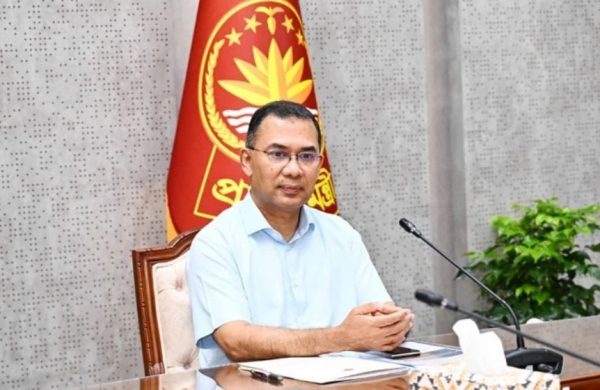
To review civil service pay, the interim government formed the 23-member Ninth National Pay Commission last July, chaired by former finance secretary Zakir Ahmed Khan. The panel finalised its recommendations within six months and submitted the report to the administration yesterday.
Alongside recommending pay rises, the commission had another critical task: assessing the financial resources required for the proposed salary structure and testing its feasibility. Its chairman, Zakir Ahmed Khan, said implementation would require an additional BDT 1.06 trillion. The government currently spends BDT 1.31 trillion on 1.4 million civil servants and 900,000 pensioners.
The government funds essential spending through revenue collection. However, the annual collection is not enough to even cover operating expenses, let alone the total expenditure. This gap forces borrowing from domestic and foreign sources. Over the past five fiscal years, government revenue rose by 35 percent while borrowing increased by 42 percent. To finance the deficit, the government took loans totalling BDT 1.83 trillion in FY 2024–25.
Salaries, allowances, pensions and interest payments now absorb the largest share of public spending. Finance division data shows that in FY 2024–25, total government expenditure crossed BDT 6.25 trillion. Of this, BDT 4.74 trillion went to operational costs and BDT 1.51 trillion to development projects, leaving operational spending at about 76 percent of total outlays.
A review of the past five fiscal years shows a consistent trend: operational spending rises each year as development expenditure shrinks. A county’s development spending is directly linked to job creation, with higher investment generating employment. Further pressure on the development budget would therefore weigh on employment. Full implementation of the pay commission’s recommendations would tighten development spending further. If the government then borrows to finance the higher wage bill, it would add to future interest costs.
Dr Zahid Hussain, former lead economist at the World Bank’s Dhaka office, told journalists: “If the pay commission’s recommendations are implemented, the financial burden would fall not only on central government employees but also on state-owned institutions, educational establishments and the MPO sector. Even using conservative estimates, at least BDT 1 trillion would be required in the budget. This forms a part of the operating expenditure; borrowing to cover this expense isn’t a viable option. That’s because financing wages through debt can never be sustainable.”
He further said, “This leaves only two options: increasing revenue or cutting government expenditure. Assuming the government implements this over three years, the upcoming budgets would require at least BDT 330 billion for this purpose. Achieving this would be extremely challenging; raising revenue to BDT 4 trillion already strains the system, leaving little room to cover operating costs. At the same time, the government must spend on electricity bills, fuel, interest payments, social protection programmes and subsidies. There appears to be no scope to meet this additional expense through spending cuts. So I can’t reconcile how the required funds for higher salaries and allowances could be sourced.”
Employees in grades one to nine are classified as first-class officers. The commission recommends raising the basic salary for Grade 1 by 105 percent — from BDT 78,000 to BDT 160,000. Proposed increases for subsequent grades are: Grade 2 from BDT 66,000 to BDT 132,000; Grade 3 from BDT 56,500 to BDT 113,000; Grade 4 from BDT 50,000 to BDT 100,000; Grade 5 from BDT 43,000 to BDT 86,000; Grade 6 from BDT 35,500 to BDT 71,000; Grade 7 from BDT 29,000 to BDT 58,000; Grade 8 from BDT 23,000 to BDT 47,200; and Grade 9 from BDT 22,000 to BDT 45,100.
Grades 10 to 20 cover second, third and fourth-class employees. The commission proposed the following revised basic salaries: Grade 10 from BDT 16,000 to BDT 32,000; Grade 11 from BDT 12,500 to BDT 25,000; Grade 12 from BDT 11,300 to BDT 24,300; Grade 13 from BDT 11,000 to BDT 24,000; Grade 14 from BDT 10,200 to BDT 23,500; Grade 15 from BDT 9,700 to BDT 22,800; Grade 16 from BDT 9,300 to BDT 21,900; Grade 17 from BDT 9,000 to BDT 21,400; Grade 18 from BDT 8,800 to BDT 21,000; Grade 19 from BDT 8,500 to BDT 20,500; and Grade 20 from BDT 8,250 to BDT 20,010.
On implementation, Finance Adviser Dr Salehuddin Ahmed said the next step would be to form a committee to carry out the proposals. “A committee will be constituted to work on the implementation methodology,” he said.
The current pay commission was formed twelve years after the previous body in 2013. On the basis of the previous commission’s recommendations, the government raised basic salaries in 2015 by 95 percent for the highest grade and 101 percent for the lowest. Authorities said at the time that no further pay commissions would be formed and that civil service pay would instead be adjusted annually in line with inflation, a pledge that was never implemented.
“Recommendations from a pay commission are never implemented in full,” Mahbub Ahmed, former senior secretary of the finance division, told journalists. “The extent of implementation depends entirely on the government’s fiscal capacity. Past increases have also been phased in gradually. The government will certainly factor in financial constraints before deciding on the current commission’s proposals. However, if the bulk of resources is spent solely on operating expenses, the government’s capacity for development funds will decline. This would have a negative impact on employment. Therefore, alongside increasing salaries and allowances in line with fiscal capacity, emphasis must also be placed on raising revenue.”
Raising salaries and allowances for serving employees also lifts pension liabilities for retirees. Each year, a large share of the budget goes to wages and pensions, with expenditure reaching BDT 1.31 trillion in FY 2024–25, up from BDT 986.62 billion in 2023–24, BDT 897.09 billion in 2022–23, BDT 762.27 billion in 2021–22, and BDT 565.81 billion in FY 2020–21.
The budget for the current fiscal year allocates BDT 1.61 trillion for salaries and pensions. Following submission of the pay commission’s report, the revised budget added BDT 220 billion to meet the proposed increases.
Mustafizur Rahman, a distinguished fellow at Centre for Policy Dialogue (CPD), told journalists, “There is no objection to ensuring that government employees can maintain a decent standard of living and focus on their work. Taken together with inflation, their purchasing power has eroded significantly. In that sense, the pay commission’s recommendations have merit. At the same time, we also want guarantees of transparency and accountability in the services provided by government employees. This cannot be implemented overnight, so the government must set out a clear timeframe for how it will be carried out. Moreover, since government employees are directly involved in revenue collection, assurances are also needed on how revenue mobilisation will be increased while preventing tax evasion.”







Editor & Publisher: Golam Mostafa Jibon
News & Commercial Office:
2 R. K Mission Road, Dhaka & Railgate, Sirajganj.
Hotline: 01715-319996, 01558-314179
E-mail : editor.thedailysky@gmail.com
news.thedailysky@gmail.com