

Usual crimes drop, sexual and mob violence surge
- Update Time : Sunday, August 23, 2026

Staff Reporter:
A mixed law-and-order landscape has emerged during the first six months of the BNP-led government, marked by a decline in petty theft and robbery alongside a concerning rise in homicides, rioting, and violence against women and children, according to official Police Headquarters data.
Despite official assertions from Home Minister Salahuddin Ahmed that security has visibly improved, human rights advocates and criminologists urge the administration to treat the figures as an early warning rather than a sign of success.
Following its formation on February 17, the government designated law enforcement reform and crime suppression as core national priorities. Prime Minister Tarique Rahman reaffirmed that restoring public safety and clamping down on extortion remained central to the administration’s policy, launching several special operations targeting drug networks and organized crime.
Between February and July 2026, total recorded criminal cases rose to 99,992—an increase of 10,980 cases compared to the 89,012 recorded during the final six months of the preceding interim government (August 2025 – January 2026).
Conventional Theft Falls, Violent Crime Rises
The statistical breakdown highlights a sharp divide between property crimes and violent offences.
Conventional street crimes experienced a notable drop under the new administration:
- Robbery: Down from 328 to 256 cases
- Dacoity: Decreased from 960 to 904 cases
- Abduction: Reduced from 563 to 512 cases
- Burglary & Theft: Burglary dropped from 1,659 to 1,591, while general theft fell from 5,113 to 4,808 cases
Conversely, grave offences against persons escalated across the country:
- Homicides: Increased slightly to 1,789 murder cases compared to 1,780 recorded during the prior six-month period.
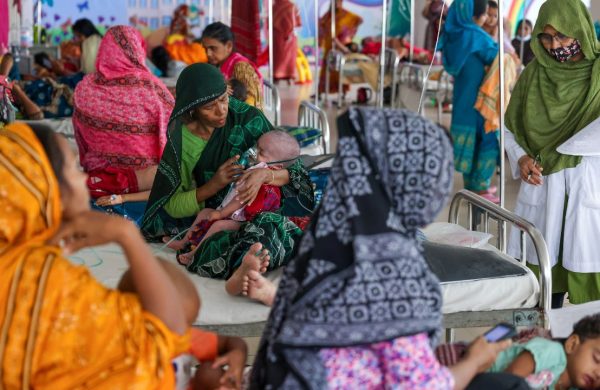
- Gender-Based & Child Violence: Registered a sharp uptick, rising from 10,090 cases to 11,165.
- Attacks on Law Enforcement: Incidents targeting police officers grew from 275 to 317.
- Rioting: Rose from 10 to 13 distinct incidents.
Crime trajectories also diverged along regional lines. Security conditions improved across metropolitan Dhaka, Khulna, and Sylhet, as well as the railway range. However, total reported crime surged across the Dhaka, Chattogram, Rajshahi, Rangpur, Barishal, Mymensingh, and Sylhet administrative ranges, alongside urban spikes in Gazipur, Rangpur, Chattogram, Rajshahi, and Barishal.
Expert Caution vs. Official Optimism
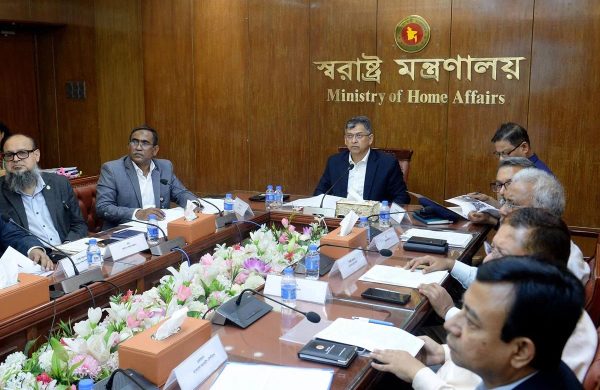
Addressing reporters at the Secretariat on August 17, Home Minister Salahuddin Ahmed defended the administration’s record, noting that law and order had steadily improved, though adding that “whether the progress is satisfactory will ultimately be judged by the public.”
Human rights activist Abu Ahmed Faijul Kabir cautioned against overconfidence, stressing that public safety cannot be measured by numerical declines in petty theft alone.
“An improvement is only meaningful when citizens feel safe from murder, mob justice, and gender-based abuse,” Kabir noted. “The government must strengthen institutional police capacity, sever political patronage of criminal elements, and ensure equal application of the law.”
Criminology experts also pointed to external factors influencing seasonal crime spikes, including political frictions following the election cycle and the lingering security impact of prison escapes that occurred during earlier political unrest.
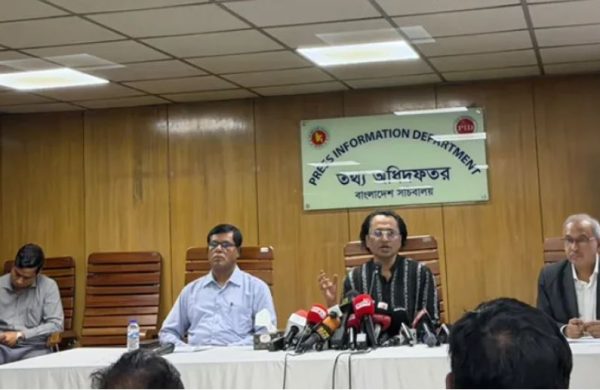
Addressing the figures, Khondoker Rafiqul Islam, Additional Inspector General of Police Headquarters, acknowledged that public tendencies to take the law into their own hands remain a key operational challenge. However, he emphasized that monthly murder rates have remained relatively steady at roughly 300 cases per month, often inflated in statistics by late-registered historical cases. He assured that law enforcement agencies are actively deploying field units to curb vigilante activity and stabilize vulnerable districts.







Editor & Publisher: Golam Mostafa Jibon
News & Commercial Office:
2 R. K Mission Road, Dhaka & Railgate, Sirajganj.
Hotline: 01715-319996, 01558-314179
E-mail : editor.thedailysky@gmail.com
news.thedailysky@gmail.com