

Why tasteless Indian hilsa flooding Bangladesh?
- Update Time : Tuesday, September 15, 2026
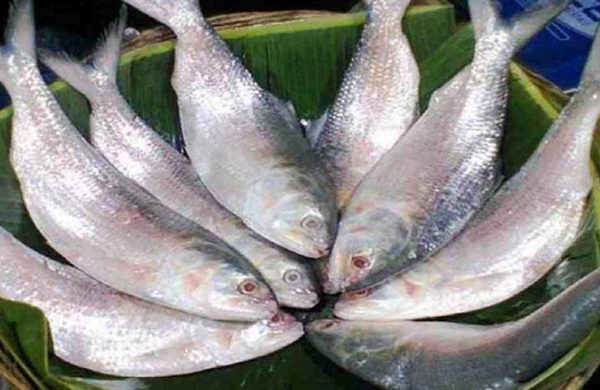
Over 350 tonnes imported through Benapole in two months; traders say lower prices and supply shortages are driving imports
Special Correspondent:
Bangladesh, long regarded as one of the world’s leading producers of hilsa, is now importing the prized fish in significant quantities from India—even during the peak hilsa season.
In the first two months of the current fiscal year, 19 Bangladeshi companies imported more than 352 tonnes of hilsa worth nearly Tk 7 crore through the Benapole land port. Most of the fish, according to importers and officials, was sourced from Gujarat in western India.
The imports have raised questions among consumers and fisheries experts, particularly as some traders are allegedly selling the imported fish in local markets as Bangladeshi hilsa.
Every year, the export of Bangladeshi hilsa to West Bengal ahead of Durga Puja generates debate. This year, however, the flow has reversed, with large quantities of Indian hilsa entering Bangladesh through the Petrapole-Benapole land route.
Syed Anwar Maksud, secretary of the West Bengal Chilled Fish Exporters Association said, “Around 500 metric tonnes of hilsa had been exported to Bangladesh through West Bengal over the past two months.”
He claimed that almost all of the fish originated in Gujarat.
WHY ARE TRADERS IMPORTING HILSA?
Importers and people involved in the trade believe the price difference between Indian and Bangladeshi hilsa is one of the main reasons behind the increased imports.
Hilsa prices in Bangladesh are comparatively high, creating an opportunity for traders to source the fish from India at a lower cost and sell it in the domestic market.
According to several officials and importers, the purchase price of Indian hilsa is a maximum of around $2 per kilogram, equivalent to roughly Tk 246. Even after adding customs duties and other costs, imported hilsa can remain cheaper than locally sourced fish of a similar size.
This gives traders a greater scope for profit, they said.
Mohammad Kamruzzaman, head of a customs clearing and forwarding (C&F) firm working on behalf of importers, said domestic supply was inadequate compared with demand.
“Traders are turning to imports because supply is lower than market demand,” he said, adding that no businessman would import fish unless there was a possibility of making a profit.
He also said hilsa imports from India had started as early as July last year.
MORE THAN 350 TONNES THROUGH BENAPOLE:
According to data from the Jessore District Fisheries Office, 19 companies imported 352,484 kilograms of hilsa from India during July and August, the first two months of the current fiscal year. The total value of the imported fish was nearly Tk 7 crore.
Ashwadul Alam, fish quarantine inspector at Benapole Land Port, confirmed the figure.
Jessore District Fisheries Officer Mohammad Monirul Mamun said importing hilsa from India was not a new phenomenon, but the volume seen this year was unusually high.
“Hilsa has been imported from India before, but never on such a large scale,” he said.
He suggested that increased availability of hilsa in India could also have encouraged Bangladeshi traders to import the fish.
According to Mamun, the companies concerned obtained the necessary permissions before bringing in the fish.
The Department of Fisheries Director General Dr Mohammad Khaled Konok said permission had been granted to a limited number of companies based on their applications.
“Hilsa imports are not prohibited. Hilsa has been imported in limited quantities in the past as well. This year, some companies were given permission based on their applications because of lower supply in the domestic market,” he said.
DECLINING PRODUCTION RAISES CONCERNS:
The imports have come at a time when Bangladesh’s hilsa production has been declining for three consecutive years.
Government statistics show that the country produced 571,000 metric tonnes of hilsa in the 2022-23 fiscal year. Production fell to 529,000 tonnes in 2023-24 and declined further to 504,000 tonnes in 2024-25.
Researchers are also concerned that not only has overall production fallen, but the average size of hilsa has declined over the past three years.
Bangladesh had seen a sustained increase in hilsa production for nearly two decades. But the recent decline has raised questions about the effectiveness of conservation measures and the health of the country’s aquatic ecosystems.
Hilsa researcher Dr Anisur Rahman attributed the decline to several factors, including river pollution, indiscriminate harvesting of jatka (juvenile hilsa) using banned current nets and excessive sand extraction from rivers.
These factors, he said, have reduced the availability of hilsa in Bangladesh’s waters and contributed to shortages in the market.
WHY DOES IMPORTED HILSA TASTE DIFFERENT?
The difference in taste between hilsa from different regions has long been a subject of discussion among consumers.
Experts say the characteristics of hilsa can vary depending on its habitat, feeding conditions, migration patterns and the salinity of the water. Hilsa that migrates between the sea and rivers can develop differences in flavour, texture and fat content depending on where it spends different stages of its life cycle.
Dr Khaled Konok said hilsa is essentially a marine fish that enters rivers during its breeding season. He suggested that excessive fishing in the sea could reduce the stock available within Bangladesh’s maritime waters.
The large-scale import of Indian hilsa during the local hilsa season has therefore prompted questions about why domestic supply has become insufficient despite Bangladesh’s long-standing reputation as a major hilsa producer.
BANGLADESH MISSES HILSA EXPORT TARGET:
The country’s hilsa trade picture has changed significantly in recent years. Bangladesh not only increased imports of hilsa but also failed to meet its export target in the last fiscal year.
Officials said the government had set a target of exporting 1,200 tonnes of hilsa, but less than 110 tonnes were actually exported.
The development is particularly striking given Bangladesh’s position as one of the world’s largest hilsa-producing countries.
According to the Bangladesh Fisheries Research Institute, hilsa accounts for around 12 per cent of the country’s total fish production. Bangladesh produces a significant share of the world’s hilsa.
QUESTIONS OVER A TK 400 CRORE PROJECT:
The government launched a six-year project in 2020 with the aim of increasing hilsa production. However, questions have now been raised over the effectiveness of the initiative.
Dr Khaled Konok said around Tk 400 crore had been allocated for the project.
“It needs to be assessed how effective the project has been and whether there were any lapses anywhere,” he said, stressing the need to identify the reasons behind the decline in production.
He also said the government should examine the broader factors affecting hilsa stocks, including fishing pressure in the sea.
The large-scale import of Indian hilsa has thus exposed a paradox in Bangladesh’s fisheries sector: a country that has built a global reputation for its prized hilsa is increasingly turning to imports to meet domestic demand.
With production declining, fish sizes reportedly becoming smaller and exports falling far short of targets, fisheries experts say the immediate challenge is not merely to increase supply but to understand why Bangladesh’s hilsa stocks are under growing pressure—and whether existing conservation and production programmes are delivering the results they were designed to achieve.










Editor & Publisher: Golam Mostafa Jibon
News & Commercial Office:
2 R. K Mission Road, Dhaka & Railgate, Sirajganj.
Hotline: 01715-319996, 01558-314179
E-mail : editor.thedailysky@gmail.com
news.thedailysky@gmail.com