

Wholesale prices of pulses and dates trend downward ahead of Ramadan
- Update Time : Thursday, January 8, 2026
TDS Desk:
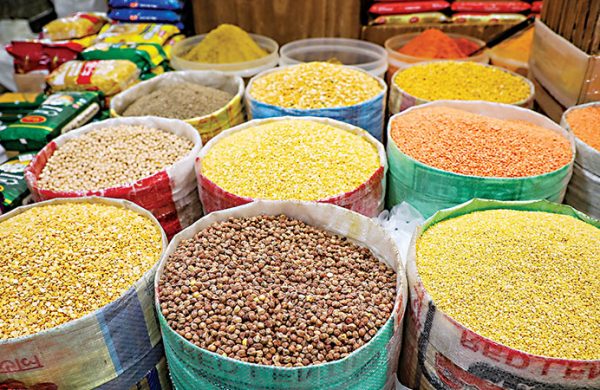
Consumer markets in Bangladesh typically come under added pressure in the lead-up to Ramadan. While rice demand tends to ease slightly during the month, demand for pulses, edible oil, dates, onions, and other iftar and sehri essentials rises sharply. Past experience shows that prices of these items often begin climbing one to two months before Ramadan. This year, however, the market picture appears different. Over the past month, wholesale prices of onions as well as various pulses and dates have declined noticeably, with the trend beginning to filter through to retail markets. Market participants hope that if this momentum continues, prices of pulses and other daily necessities will remain within consumers’ reach throughout Ramadan.
A visit to Khatunganj in Chattogram, the country’s primary wholesale hub for essential commodities, shows that prices of almost all types of pulses have moved downward over the past month. Chickpeas, in particular, have seen a sharp drop, falling to as low as BDT 68 per kg at the wholesale level. Throughout 2025, the same item traded at BDT 110–120 per kg. Prices of lentils, mung beans, anchor dal, pelon, khesari, and black gram have also declined. Traders say steady supply has helped keep the market largely stable ahead of Ramadan.
Data from trading houses show that coarse Australian lentils were sold yesterday at BDT 70–72 per kg in the wholesale market, down from BDT 100–102 a few months ago. As the most widely consumed pulse in the country, lentils have recorded the steepest price fall over the past month. In contrast, Indian lentils present a different picture. Due to higher import duties, prices of Indian lentils have risen by around BDT 40 per kg and are now selling at BDT 160–162.
The mung bean market has also shown a clear downward trend. Prices of small-sized mung beans have fallen by BDT 20–25 per kg to BDT 135–140, while medium-sized varieties are trading at BDT 95–100 per kg after a similar reduction. With the domestic supply of mung beans declining toward the end of the season, demand has shifted to imported varieties. However, traders say adequate imports and lower prices in the global market have kept the mung bean market stable.
At the wholesale level, anchor dal is currently selling at BDT 42–43 per kg, down from above BDT 60 per kg in mid-last year. Prices of khesari dal — one of the most sought-after pulses during Ramadan — have also eased to BDT 68–70 per kg from BDT 75–80 a month ago. Pelon dal has dropped by BDT 15–20 per kg to around BDT 70, while whole pelon is trading at BDT 45–50 per kg. Black gram prices have declined by about BDT 10 per kg over the past month and were sold yesterday at BDT 110–112 per kg in the wholesale market.
Traders attribute the easing prices to a significant fall in global booking prices for pulses this year. Prices of lentils, anchor dal, and chickpeas have declined by as much as $150–200 per tonne, enabling higher imports ahead of Ramadan. At the same time, lower prices of winter vegetables and poultry products—particularly chicken and eggs—have reduced overall demand for pulses. Increased imports in recent weeks in anticipation of Ramadan have further boosted supply, which traders say is a key factor behind the current downward price trend.
When contacted, Azizul Haque, proprietor of Messrs Haque Trading at Khatunganj in Chattogram, told journalists, “The pulse market is no longer dependent on a single large importing entity. At one time, a handful of major importers dominated the market by bringing in the bulk of pulses and effectively controlling prices. Over the past one to one-and-a-half years, however, those large importers have become largely inactive. As imports are now being carried out by small and medium-sized trading houses, a balance has emerged in the wholesale market. In particular, reduced dominance in lentils, chickpeas, and anchor dal has helped prices move towards stability.”
Referring to the period after August 5, when prices of lentils, chickpeas, and anchor dal remained unusually high, the trader said, “The situation has gradually changed. Over the past month alone, prices of almost all pulse items have fallen by as much as BDT 50 per kg. As a result, we expect the market for chickpeas, lentils, and anchor dal — items with the highest demand during Ramadan — to remain at a tolerable level in the coming fasting month,” he said. He added that, as Ramadan will begin during the winter season, vegetable supplies are expected to remain relatively abundant, which could also help keep the overall market for Ramadan-centric essentials stable.
The downward trend in pulse prices has also been reflected in reports by the Department of Agricultural Marketing (DAM). According to the department’s data, on January 7, 2025, wholesale prices across the country stood at BDT 108–110 per kg for chickpeas, BDT 95–97 for imported coarse lentils, BDT 150–155 for mung beans, BDT 55–58 for anchor dal, and BDT 102–104 for khesari dal. Official figures now show that wholesale prices of all varieties of pulses have declined significantly from those levels. Traders say that if supply increases further relative to demand, there is scope for prices to ease even more.
Market participants note that at present, only products imported from India are experiencing price hikes. Following a five percent increase in duties on goods imported through land ports, prices of Indian products have been rising for several weeks, particularly dry foods and spices. However, like most Ramadan essentials, including dates, which are not heavily dependent on India, wholesalers expect the domestic consumer market to remain more stable than in the past. With lower duties encouraging higher import volumes, prices of dates could fall noticeably ahead of Ramadan. Similarly, after a government-approved increase, edible oil prices are trading at manageable levels in the wholesale market. As global booking prices of soybean and palm oil remain on a downward trend, stakeholders say there is room for the government to consider reducing prices ahead of Ramadan if it so chooses.
The Consumers Association of Bangladesh (CAB), a long-standing civic platform working to protect consumer interests, ensure fair pricing, and promote market transparency, has also welcomed the recent developments. CAB central vice-president SM Nazer Hossain told journalists, “The decline in prices of pulses and other Ramadan-focused items is undoubtedly reassuring. However, every year, a section of traders attempts to artificially raise prices by restricting supply and increasing stockpiling a few weeks before Ramadan. The government must remain vigilant in advance to prevent such practices.”
He said CAB has called for strengthened government action during Ramadan and other key periods, including monitoring stock positions of importers and traders, conducting drives against unjustified price hikes, and taking multifaceted measures to keep prices affordable. Regular market monitoring and proper investigation into the real causes of price increases could significantly reduce public hardship, he added, stressing the need to enhance manpower and capacity at government regulatory agencies.










Editor & Publisher: Golam Mostafa Jibon
News & Commercial Office:
2 R. K Mission Road, Dhaka & Railgate, Sirajganj.
Hotline: 01715-319996, 01558-314179
E-mail : editor.thedailysky@gmail.com
news.thedailysky@gmail.com