

24pc children under five suffer from stunting
- Update Time : Saturday, August 8, 2026
TDS Desk:
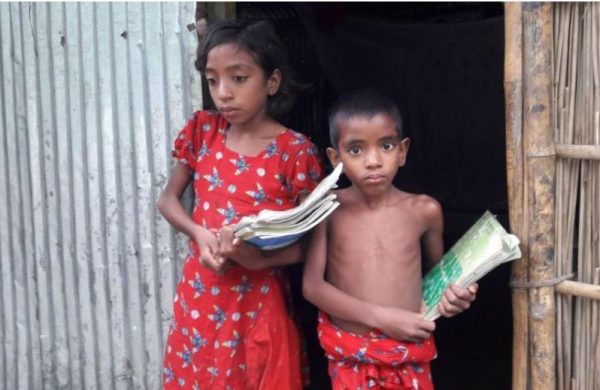
Nearly one in four Bangladeshi children under the age of five are too short for their age because of chronic malnutrition and poor health during early childhood, according to a national survey.
The Bangladesh Bureau of Statistics’ (BBS) Multiple Indicator Cluster Survey (MICS) 2025, published last month with technical support from Unicef, found that 24 percent of children under five are moderately or severely stunted.
Stunting — when a child is significantly shorter than the World Health Organization’s growth standard for their age — is one of the clearest indicators of chronic malnutrition. It reflects nutritional deprivation during the first 1,000 days of life, a critical period for physical and brain development.
The survey, based on measurements of more than 23,000 children nationwide, also reveals sharp inequalities.
Children from the poorest households are more than twice as likely to be stunted as those from the richest — 32.3 percent compared with 16.1 percent. Rural children fare worse than urban children, while boys are affected slightly more than girls.
Bangladesh has made remarkable progress over the past three decades, cutting child stunting from 59.6 percent in 1997 to 24 percent in 2025.
Even so, the country remains in the WHO’s “high prevalence” category. WHO classifies national stunting rates between 20 and 30 percent as high, while rates above 30 percent are considered very high.
Bangladesh first moved out of the “very high” category in 2019, when MICS recorded a stunting rate of 28 percent. The latest findings show further improvement, but not enough to leave the high-prevalence group.
Tajuddin Sikder, professor of public health and informatics at Jahangirnagar University, said child stunting in Bangladesh results from a combination of chronic malnutrition, unhealthy feeding practices, environmental pollution and a lack of opportunities for physical activity, particularly in crowded urban areas where open play spaces are disappearing.
Compared with the rest of the world, Bangladesh continues to lag behind many countries with similar or even lower income levels.
An analysis by The Daily Star using the latest Unicef data from 163 countries found Bangladesh ranks 49th highest for child stunting. In other words, nearly two-thirds of countries report lower rates.
Although Bangladesh performs better than Afghanistan (44.6 percent), Pakistan (37.6 percent) and India (35.5 percent), its stunting rate remains more than double that of Sri Lanka (10.5 percent). It also trails Bhutan (17.9 percent) and the Maldives (15.3 percent).
The consequences extend far beyond height.
Stunted children are more vulnerable to infections such as acute respiratory illnesses and diarrhoeal diseases, increasing their risk of death in early childhood.
The condition also affects brain development, reducing cognitive ability, delaying learning and limiting educational attainment.
According to a World Bank study, stunted children are more likely to enrol in school later, repeat grades and complete fewer years of education than their peers.
The MICS findings also showed that six in 10 children aged 7-14 could correctly read at least 90 percent of the words in a simple age-appropriate story, while only 40 percent demonstrated foundational numeracy skills.
The impact lasts well into adulthood. Studies show people who experienced childhood stunting earn about 20 percent less on average, are 30 percent more likely to live in poverty and are far less likely to secure skilled employment.
Researchers say the roots of stunting begin even before birth.
Nearly half of Bangladeshi women marry before the age of 18, while one in four becomes pregnant during adolescence, increasing nutritional risks for both mothers and babies.
The survey also found that one-third of pregnant women delay antenatal care until after the first trimester, while half do not receive the recommended minimum of four check-ups.
Poor diets remain another major challenge after birth.
Nearly two in three children aged six to 23 months do not consume enough food groups to meet their nutritional needs. More than half are fed processed foods, one in five consume sugary drinks, and one-third receive no fruits or vegetables.
To tackle the problem, Tajuddin called for greater investment in research on the causes of stunting, nationwide awareness campaigns on healthy feeding practices, and reforms to restore playgrounds in schools.
Healthy growth depends not only on nutrition but also on opportunities for physical activity, he said.









Editor & Publisher: Golam Mostafa Jibon
News & Commercial Office:
2 R. K Mission Road, Dhaka & Railgate, Sirajganj.
Hotline: 01715-319996, 01558-314179
E-mail : editor.thedailysky@gmail.com
news.thedailysky@gmail.com