

Country loses nearly Tk6,000cr a year under Adani power deal
- Update Time : Monday, January 26, 2026

TDS Desk:
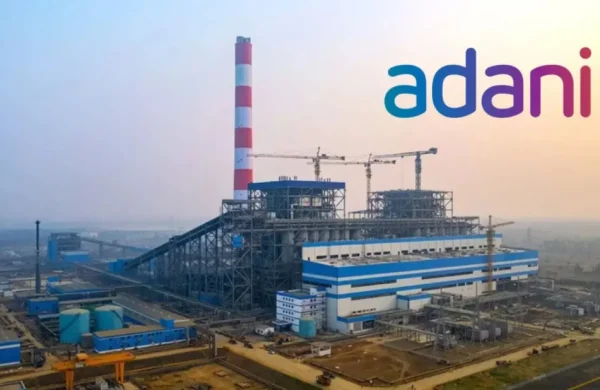
Bangladesh is losing nearly Tk6,000 crore every year due to a controversial electricity purchase agreement with India’s Adani Group, according to findings of a government review committee. The deal is costing the country an additional US$400-500 million annually.
Investigators have found evidence of widespread corruption linked to the contract, raising the possibility that a future elected government could cancel the agreement and seek compensation.
The investigation indicates that seven to eight individuals benefited illicitly from the deal.
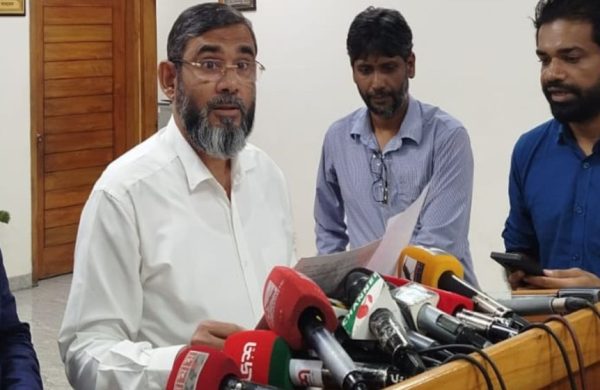
At a press conference held on Sunday at the Power Division, the National Committee reviewing contracts signed under the Electricity and Energy Rapid Supply Enhancement (Special Provisions) Act, 2010, presented its findings.
The committee stated that the interim government lacks the mandate to take action at this stage and that responsibility lies with the elected government. It also recommended pursuing arbitration in Singapore to annul the Adani power purchase agreement, describing it as the “worst” con-tract in Bangladesh’s power sector.
According to the committee, directives related to the deal originated from the office of former prime minister Sheikh Hasina. Investigators also found evidence that several individuals involved received multi-million-dollar financial benefits.
After the interim government assumed office, a five-member committee was formed on 5 Sep-tember 2024, headed by retired High Court judge Moinul Islam Chowdhury.
Other members included Professor Abdul Hasib Chowdhury of BUET’s Department of Electri-cal and Electronic Engineering, former KPMG Bangladesh COO Ali Ashraf, former World Bank lead economist Dr Zahid Hussain, and Professor Mustak Hossain Khan of the University of London’s Faculty of Law and Social Sciences.
The committee submitted its report to the ministry on 20 January, and the findings were shared with the media yesterday. The report shows that losses at the Bangladesh Power Development Board (PDB) rose from Tk5,500 crore in 2015 to more than Tk50,000 crore in 2025.
Electricity is purchased at Tk12.35 per kilowatt-hour but sold at Tk6.63 per kilowatt-hour. Dur-ing the Awami League government’s tenure, electricity generation increased nearly fourfold, while payments to private power producers rose more than elevenfold. Capacity payments in-creased around twentyfold.
The committee estimated that between 7,700 and 9,500 MW of generated electricity remains un-used, despite there being no fuel or infrastructure constraints. Annual expenditure on capacity payments alone ranges from Tk99,000 crore to Tk165,000 crore.
The report further notes that electricity from HFO-based plants costs 40%-50% more than justi-fied rates, gas-based plants cost 45% more, and solar power costs 70%-80% above normal prices. The committee warned that contracts signed under emergency legislation prioritised the interests of a small group over national interests.
Large private power producers with multiple contracts across different technologies benefited disproportionately, while select domestic and foreign sponsors gained from sovereign guarantees and international arbitration protections.
The concentration of contracts among a few sponsors gave them excessive leverage in negotiations.
Among the most controversial agreements is the Adani power deal, which involves electricity generation outside Bangladesh, thereby increasing national risk. The SS Power deal included two large plants.
In the Summit Meghnaghat case, multiple large plants were established at a single location de-spite gas shortages.
Reliance’s agreement involved operating power plants in India to supply electricity to Bangladesh.
A coal-based power plant was also constructed at Payra, although the port there is not fully operational.
Recently, electricity supplied by Adani has been priced 4-5 cents per kilowatt-hour higher than justified rates from alternative sources. Summit Meghnaghat-2 (gas-based) recorded nearly double the unit cost of other gas plants, while Summit Barishal (HFO-based) was costlier than com-parable HFO plants.
SS Power emerged as the most expensive among similar coal-fired options. The committee found that political backing and bureaucratic collusion facilitated these deals, leading to higher subsidies, mounting losses and growing arrears for the government.
The National Committee recommended that all future electricity purchase contracts, amendments and payments be made public.
It called for the reinstatement of competitive procurement, transparent and effective processes, and the establishment of an independent energy oversight body. Contracts proven to be corrupt under international standards should be cancelled, it said.
Committee chair Moinul Islam Chowdhury stated that responsibility for decisions regarding the Adani deal now rests with the power division. Given the interim government’s limited tenure, he urged the next elected government to act swiftly.
Professor Mustak Hossain Khan said Bangladesh pays nearly $1 billion annually in foreign cur-rency under the Adani agreement. Analysis shows the country pays 40-50% more for Adani elec-tricity, meaning roughly $10 billion (Tk1.2 lakh crore) of the $25 billion total cost is unnecessary, placing a heavy burden on the economy.
While Maheshkhali and another site were initially considered, Jharkhand was ultimately selected without any documented justification.
He added that electricity pricing under the deal followed no technical analysis or institutional process.
At the time, Bangladesh purchased electricity from India’s grid at 4.46 cents per kilowatt-hour, but the Adani deal fixed the rate at 8.61 cents – nearly double – which later rose to 14.87 cents.
Normally, a dedicated power plant should supply electricity at lower rates than grid imports, but in this case the opposite occurred.
The coal price index used also disadvantaged Bangladesh. Transmission costs from India, taxes and political risk were transferred to Bangladesh, while a dollar-denominated interest rate of 1.25% was applied, which was unfavourable to the country.
Bangladesh currently owes Adani around $500 million, and the company has threatened international arbitration.
Professor Mustak said international experts believe the available evidence could form the basis of a strong fraud case, potentially winnable in global courts, though delays could weaken Bangladesh’s legal position.
He stressed that the matter ultimately remains a political decision and that the incoming government must commit to full legal and institutional action.
Dr Zahid Hussain, former lead economist at the World Bank’s Dhaka office and a committee member, said the contracts clearly favoured a small group over national interests.
Between 2011 and 2024, payments to independent power producers increased elevenfold, while electricity generation rose only fourfold. PDB now faces annual losses exceeding Tk50,000 crore, with arrears in 2025 potentially reaching Tk55,000 crore. Despite surplus generation capacity, system utilisation stands at only 40%-50%.
The committee estimated that excess or underutilised capacity costs between $900 million and $1.5 billion annually, pushing PDB towards bankruptcy.
To avoid shortages, wholesale electricity prices would need to rise by 86%, making Bangladesh’s industrial electricity more expensive than in India, China, Vietnam or Sri Lanka, thereby under-mining competitiveness.












Editor & Publisher: Golam Mostafa Jibon
News & Commercial Office:
2 R. K Mission Road, Dhaka & Railgate, Sirajganj.
Hotline: 01715-319996, 01558-314179
E-mail : editor.thedailysky@gmail.com
news.thedailysky@gmail.com