

Election frenzy dulls the spirit of language month
- Update Time : Sunday, February 8, 2026

—Faizus Salehin—
February is the month of awakening for the people of Bangladesh, yet this year it arrived in profound silence. Never before has a February been so quiet. Political activists might disagree, pointing to the loud drums of the upcoming election.
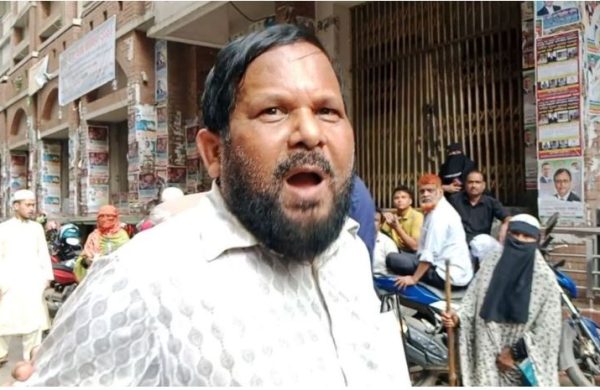
Indeed, election fever has gripped both cities and villages, and people have not been this vocal about a vote in years. However, questions remain regarding how vibrant, pure, or beautiful this enthusiasm truly is.
Authorities promised a premier, festive election, but that festive spirit is missing. In many cases, the politics of malice has poisoned the air.
The fall of February’s significance as the month of language due to the election is not a foregone conclusion. History shows several general elections occurred in February. The country held its second national parliamentary election on 18 February 1979.
Following the historic mass uprising of the 1990s, the fifth parliamentary election took place on 27 February 1991.
Many consider the 1991 vote the finest in the history of Bangladesh. During the polling, leaders of every political party expressed satisfaction with the overall environment. Candidates were also pleased, though Sheikh Hasina later alleged “subtle rigging” after the results came out—an accusation that failed to gain traction.
The 1991 election served as a critical turning point. Following Ershad’s resignation, Justice Shahabuddin Ahmed led a temporary government formed according to the “Three-Alliance Formula.” It was neither a caretaker nor an interim government, but a temporary administration specifically to hold national elections. When offered the position of Acting President, Chief Justice Shahabuddin Ahmed set a condition: he must return to his post as Chief Justice after completing his duties.
All parties and alliances agreed. This alliance formula also called for constitutional amendments to introduce parliamentary democracy. Our sophisticated political class drafted this framework quickly without commissions, referendums, or expert advice, yet it deeply influenced the Bangladeshi governance system.
Notably, while the BNP won the most seats in 1991, it fell short of a majority with 140 seats. It needed 151 to form a government. The Awami League won 88, and Jamaat-e-Islami won 18—the highest ever for Jamaat.
At the time, Abbas Ali Khan led Jamaat; many viewed him as a moderate who avoided extremist rhetoric.Jamaat supported the BNP from the outside rather than joining the cabinet, allowing Begum Khaleda Zia to form the government.
The ’91 Parliament eventually passed the 12th Amendment, establishing the parliamentary system—a historic achievement rooted in the Three-Alliance Formula.
I share this history to show that even with elections, the spirit of February never faded in the past. Neither the 1990 uprising nor previous elections overshadowed the language month. However, the 2024 mass uprising and the current election have cast a dark veil over February.
This year, one rarely hears the songs of the language movement. The timeless melodies of “Amar Bhaier Rokte Rangano” or “Moder Gorob Moder Asha” seem lost. Yet, the 1952 Language Movement birthed the aspiration for independence that fueled the nation’s soul.
February became the mantra for a Bengali renaissance, driving language, art, and literature until the July 2024 movement. Neither the autocracy of Ershad nor the authoritarianism of Sheikh Hasina diminished this spirit. In fact, during the anti-Ershad movement, the passion of February drove national politics.
The 1983 anti-Ershad movement began on 14 February, and the National Poetry Festival started in 1987 as a protest against dictatorship. Cultural movements thrived in every district, all drawing inspiration from the 21st of February.
In our history, February belongs to the blood-written names of Rafiq, Salam, and Jabbar. Thousands of Shaheed Minars, the Bangla Academy, and the Book Fair stand as witnesses to this legacy. Traditionally, newspapers dedicated their front-page columns to the language month.
This year, using the election as an excuse, authorities cancelled the Amar Ekushe Book Fair and the National Poetry Festival. In 1991, an election did not stop the fair. Even Ramadan never halted the publication or reading of books, but current circumstances have.
The Bangla Academy, once an autonomous institution, has lost its independence. Last year’s fair felt artificial and was remembered more for a dustbin controversy than for literature.
By neglecting the month of language under various pretexts, we risk a grim future. Do those who claim to be pro-liberation forces have nothing to say? Have they forgotten “The Birth of a Nation,” the famous essay by the late President Ziaur Rahman?
He wrote that the seed of the Bengali nation was sown the moment Mr Jinnah declared in Dhaka that Urdu alone would be the state language.
As the national election approaches, I will set aside these uncomfortable questions for now. I hope a fair election brings a good government—one that restores our lost linguistic and cultural heritage. May they use good governance and creativity to erase the current political culture of malice and vulgarity.
—————————————
Author: Senior Journalist and Novelist





Editor & Publisher: Golam Mostafa Jibon
News & Commercial Office:
2 R. K Mission Road, Dhaka & Railgate, Sirajganj.
Hotline: 01715-319996, 01558-314179
E-mail : editor.thedailysky@gmail.com
news.thedailysky@gmail.com