

Why are fundamental issues ignored in election campaigns?
- Update Time : Thursday, February 5, 2026

—Audite Karim—
Election campaigning by political parties has now reached its peak. Parties are attacking and criticizing one another in increasingly harsh language, and these exchanges often cross into outright aggression. An analysis of the campaign strategies of the two major political parties since the official start of electioneering shows that nearly half of their campaign time has been spent revisiting the past. One side brands the other as anti-Liberation War forces, repeatedly invoking their role in 1971 as the primary line of attack. The other side responds with allegations of corruption, attempting to corner its opponent by accusing them of corruption and extortion. In essence, much of the campaign discourse remains trapped in a cycle of historical blame.
Another frequently discussed issue in election campaigns is women’s rights, which has itself become a subject of counter-attacks. Beyond this, both major parties promise to eliminate unemployment, commit to developing infrastructure, and speak of building a corruption-free country. These pledges, however, are familiar – they are repeated in almost every election. What makes this election different is the context from which it has emerged, stemming from the aspiration to rebuild a new Bangladesh. The country stands at the threshold of a new political reality, and the people want new politics and new ideas. Nonetheless, there is little novelty in the election campaigns. Many crucial questions remain unanswered, and there is a striking absence of concrete planning. The election pledges of the major parties lack clear, actionable strategies to address the country’s most fundamental problems.
For any new government, the foremost challenge will be overcoming the ongoing economic crisis. For both BNP and Jamaat, employment lies at the center of their economic narratives. Both parties speak of creating new jobs, with BNP emphasizing the expansion of family card programs, while Jamaat strongly criticizes such initiatives. However, whether it is eliminating unemployment or distributing family cards, both approaches require substantial financial resources. Without a sound and credible economic structure, where will this money come from? How exactly will employment be generated?
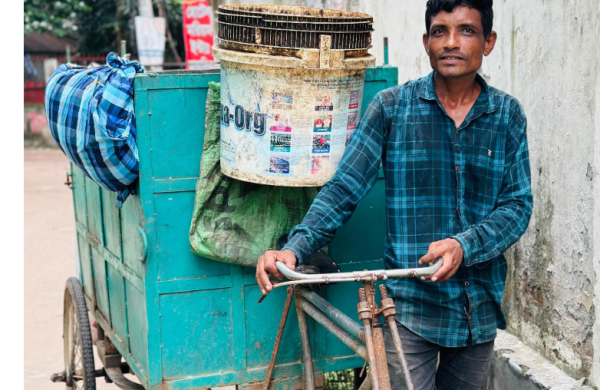
The backbone of Bangladesh’s economy is the private sector, which accounts for nearly 94 percent of total employment. At present, however, the private sector is facing one of its most critical periods. Since 5 August 2024, thousands of private educational institutions have shut down, and many industrial factories have fallen victim to arson attacks. Due to growing insecurity, numerous factory owners have suspended operations altogether. Many institutions have been targeted by mobs, while businesspeople have been harassed through false murder cases and branded as accomplices. Out of fear, many entrepreneurs have withdrawn from active business. The blanket freezing of bank accounts has further deepened this crisis, creating a hostile environment for private enterprise. At the same time, silent extortion continues unabated. Business leaders openly complain that where bribes once amounted to one lakh taka, demands have now risen to ten lakh taka. As a result, private entrepreneurs are retreating and adopting a wait-and-see approach. The interim government, meanwhile, appears largely indifferent to the plight of the private sector.
Economists now identify the collapse of investor confidence as the most serious challenge facing the economy. Both local and foreign investors are hesitating, closely observing developments before making any commitments. In this context, industrialists and businesspeople are eager to hear the future plans of political parties. They are looking for clear strategies for economic recovery and reassurance about stability. So far, however, no political party has offered a convincing message of hope.
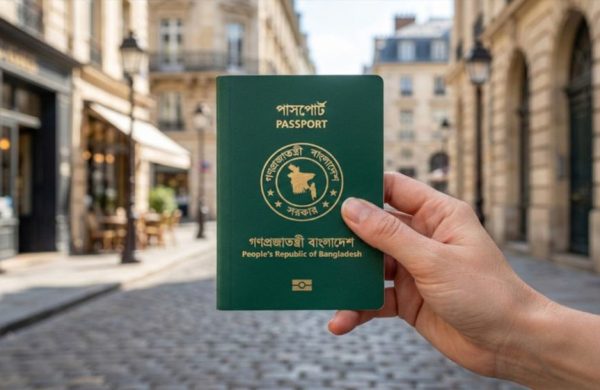
Another critical issue confronting Bangladesh is foreign policy. Over the past eighteen months, several negative developments have marked Bangladesh’s diplomatic engagements. Many countries have stopped issuing visas to Bangladeshis, a situation that is both humiliating and deeply demoralizing for ordinary citizens.
Efforts by the interim government to repatriate the Rohingya to their homeland have also failed, while Bangladesh appears increasingly directionless in economic diplomacy. Addressing these challenges will require a coherent and effective diplomatic strategy from the next government. What that strategy will be remains unclear.
In recent years, global politics has undergone rapid transformation, and Bangladesh’s position in the international arena has come under growing scrutiny and pressure. As a result, foreign policy for the post-election government will not be a mere formality. One of the core challenges of Bangladesh’s foreign policy is maintaining balance. Diplomatic equilibrium must be preserved in relations with the United States, China, India, the European Union, and the Muslim world.
It will be a critical responsibility, intrinsically linked to the country’s future security, economic progress, and diplomatic dignity. The public deserves to be informed about these matters in detail. However, election campaigns have largely ignored them.
The United States is one of Bangladesh’s main export markets and a powerful force in international politics. China, on the other hand, is a key partner in Bangladesh’s infrastructure development and trade. India is Bangladesh’s closest neighbor and a dominant power in regional politics. The European Union is the primary market for Bangladesh’s ready-made garments sector. In this reality, if the new government’s foreign policy tilts excessively toward any one side, there is always a risk of damaging relations with the others.
Despite this, no political party has presented a comprehensive or specific foreign policy vision during the election campaign. Fundamental questions remain unanswered. What will relations with India look like? What is the concrete plan for Rohingya repatriation? How will the government address the suspension of visas for Bangladeshis? What strategy will guide manpower export diplomacy?
These omissions are not limited to foreign policy. The people of Bangladesh also want to know how a new government plans to stop mob violence, and whether there will be clear commitments in this regard. What is the government’s position on the thousands of false cases currently plaguing the system? Will harassment through such cases continue, or will it be halted? The public wants to know whether discipline will return to educational institutions and whether the new government can bring students back to classrooms.
There are ongoing protests over plans to hand over Chittagong Port to foreign companies, with the port currently paralyzed. Furthermore, no major political party has articulated a clear position on this issue. Similarly, questions remain about the secret and public agreements being signed by the interim government as it prepares to leave office. Will the next government uphold the various military agreements hastily concluded during this period, or will they reassess them?
Political parties must answer these questions during election campaigns, because within these answers lies the roadmap for Bangladesh’s future.
————————————————————————
Audite Karim is writer and playwright. Email: auditekarim@gmail.com





Editor & Publisher: Golam Mostafa Jibon
News & Commercial Office:
2 R. K Mission Road, Dhaka & Railgate, Sirajganj.
Hotline: 01715-319996, 01558-314179
E-mail : editor.thedailysky@gmail.com
news.thedailysky@gmail.com