

Gas without rules, deaths without answers
- Update Time : Tuesday, September 22, 2026
TDS Desk:
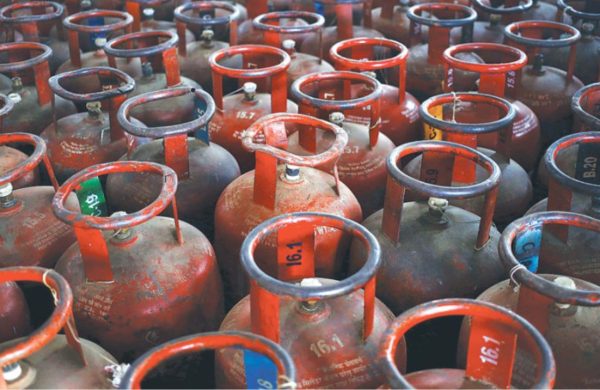
Despite lacking legal approval, CNG filling stations across Bangladesh are routinely supplying compressed natural gas in cylinders to industrial factories.
This illicit trade poses severe safety risks and raises serious concerns over regulatory oversight following a wave of deadly explosions.
Investigations reveal that several garment factories have been utilising covered vans fitted with makeshift gas cylinders as mobile fuel reserves, directly violating licensing conditions.
At multiple CNG stations, gas intended strictly for motor vehicles is illegally pumped into these van-mounted cylinders.
Station owners and employees allegedly conduct these unsafe transactions under informal daily agreements, charging inflated rates above official government prices.
Despite catastrophic accidents and fatalities, no state authority has taken responsibility for curbing the practice.
A field review encompassing over 100 factories and 10 CNG stations across Savar, Ashulia, Dhamrai, Gazipur, Narsingdi, and Brahmanbaria confirmed the widespread prevalence of these illegal operations.
Local sources verified that stations in the Aminbazar, Ulail, and Radio Colony areas of Savar, as well as Dhulivita, Thana Road, and Sutrapur in Dhamrai, regularly service van-mounted cylinders.
Following recent disasters, the Department of Explosives, Rupantarita Prakritik Gas Company Limited (RPGCL), the Bangladesh CNG Filling Station and Conversion Workshop Owners Association, and local administrative bodies all acknowledged the practice is illegal.
However, the regulatory agencies have engaged in mutual blame-shifting regarding enforcement.
Energy and safety experts attribute the persistence of these dangerous operations to weak monitoring and lax enforcement.
Former director general of Fire Service and Civil Defence, Brigadier General (retd) Ali Ahmed Khan, said that inadequate oversight remains the root cause of these tragedies.
“Unless coordinated action is taken between the Ministry of Energy and the Ministry of Industries, more fatal accidents will occur,” Khan warned.
He alleged that operators manage to bypass regulations through systemic corruption. “Locally manufactured, substandard cylinders carry immense risk and are purchased at low prices.
Although filling such vessels at CNG stations is strictly prohibited, authorities turn a blind eye.”
Fatalities rise amid unchecked blasts
The human toll continues to climb. On Sunday night, a devastating explosion at the Pretty Composite Textile factory in Jamgora of Ashulia killed eight people and injured 25 others.
Police noted that the victims were burned beyond recognition, requiring DNA testing for identification.
Fire Service and Civil Defence Deputy Assistant Director (Zone-4) Hafizur Rahman reported that 10 to 12 covered vans rigged with cylinders were present on the factory premises at the time of the blast.
“Using gas cylinders in this makeshift manner inside factory compounds is extraordinarily hazardous,” he said.
A four-member investigation committee, headed by Fire Service and Civil Defence Dhaka Assistant Director Kazi Nazmuz Zaman, has been formed to probe the incident.
According to Fire Service statistics, Bangladesh recorded 665 fire incidents in garment factories, 615 in other industrial units, and 483 at gas cylinder outlets in 2025 alone, resulting in at least 85 deaths.
In a similar disaster on 31 December 2024, four people, including an engineer named Riaz Uddin, lost their lives in a cylinder explosion at an Akij factory in Bahubal, Habiganj.
Earlier, on 13 May 2023, four individuals died in a cylinder blast at Billal’s factory in Tetultola, near Ashulia’s Fantasy Kingdom.
Regulatory interventions stalled by bureaucracy
Deputy Chief Explosives Inspector Mohammad Tofazzal Hossain said that certain CNG stations secretly supply gas to industrial cylinders under cover of darkness.
“This is completely illegal. Licence terms strictly prohibit filling any container other than vehicle fuel tanks,” Hossain noted.
He added that while garment factories ought to apply for approved Liquefied Petroleum Gas (LPG) connections, the Department of Explosives has limited scope to intervene during covert night-time operations, leaving monitoring duties to local police and district administration.
RPGCL General Manager (CNG) Khaleda Begum iterated that supplying CNG to non-converted transport violates core licensing agreements.
“Station owners and trade associations have been issued repeated warning letters,” she said.
Monoranjan Bhakta, President of the Bangladesh CNG Filling Station and Conversion Workshop Owners Association, acknowledged the practice is unlawful but deflected blame onto factory management.
“Despite our repeated directives, factory owners continue to demand gas in this manner. Non-compliance is rampant, directly leading to these fatal accidents,” Bhakta claimed.
Addressing accountability, Dhaka Additional Superintendent of Police (Savar Circle) Rakibul Hasan told that law enforcement should not bear sole responsibility.
“While police address cognisable offences and hold partial responsibility regarding illegal acts, primary regulatory enforcement lies with the Department of Explosives, the upazila administration, and the Department of Inspection for Factories and Establishments.”







Editor & Publisher: Golam Mostafa Jibon
News & Commercial Office:
2 R. K Mission Road, Dhaka & Railgate, Sirajganj.
Hotline: 01715-319996, 01558-314179
E-mail : editor.thedailysky@gmail.com
news.thedailysky@gmail.com