

The public awaits measures to curb mob violence
- Update Time : Wednesday, January 21, 2026

—Mostafa Kamal—
With elections approaching, law enforcement agencies are already under increased pressure. The role of the police and other law enforcement bodies is crucial to ensuring a free, fair and secure election. This time, however, the nature and reality of the situation are more serious than at any point in the past, placing additional strain on the forces responsible for maintaining law and order.
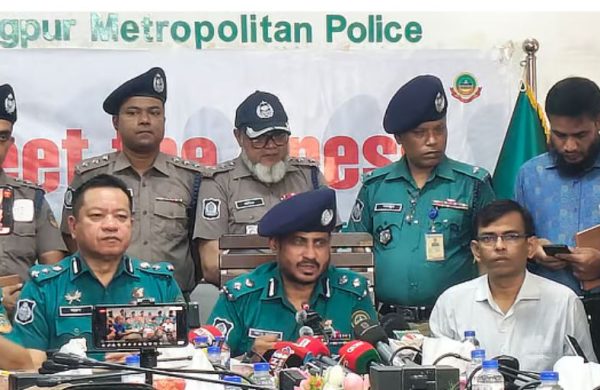
Following strict government directives, the police and other law enforcement agencies are leaving no stone unturned in their efforts to curb mob violence. Yet their efforts are proving insufficient. When action is taken in one area, mobs quickly launch attacks elsewhere. Alongside mob activity, incidents of murder, robbery, extortion and mugging are also on the rise. Crimes such as violence against women, attacks on police officers, drug trafficking, smuggling and theft are likewise increasing.
It is true that the police’s image has been damaged due to their negative role during protests, where party cadres often acted with impunity under the protection of law enforcement. Inspector General of Police (IGP) Baharul Alam told the media that the previous government, over 16 years, excessively used the police for political purposes, morally weakening the force. However, the public no longer wishes to hear such explanations. Nor do people expect the police to become people-friendly overnight. What they do expect is visible professionalism. They want to see concrete efforts by the police to prevent ongoing crimes, including mob violence. Even limited visible action would restore some public hope and instil fear among mob leaders, extortionists and other criminals.
A report by the human rights organisation Odhikar has highlighted a grim picture of human rights violations and the fragile law and order situation over the past year. The report provides detailed accounts of mob violence, including 89 killings. The highest number of mob-related deaths—45—occurred in the Dhaka division. It goes without saying that controlling mobs ahead of the election poses a major challenge. If this tendency of taking the law into one’s own hands is not brought under control before the polls, concerned citizens fear where the situation may lead.
There is little time now for an in-depth examination of why mob beatings remain beyond control, as the reasons are widely known. Since the July mass uprising, the country has witnessed one incident of mob violence after another. While mob violence existed in the past, it has now reached extreme levels. Case studies reveal that mobs are often preceded by deliberate tagging, rumours, suspicion or allegations of theft, creating a dramatic build-up. Even minor disputes are enough to trigger mob formation. It is no secret how organised groups mobilise people to attack individuals. Various vested interests lie behind such incidents. Therefore, mob violence must be suppressed with a firm hand. If the police and other law enforcement agencies take a few decisive actions, mobs will be forced to retreat. Otherwise, such incidents will continue. The government must prove through action—not words—that it is serious. Restoring public confidence is the government’s responsibility.
Every instance of mob formation creates chaos, whether in cities or villages. This cannot be justified as an expression of public anger. Such justification effectively encourages people to take the law into their own hands. Law enforcement agencies alone cannot stop this incitement. Public awareness must be raised, particularly among leaders and activists of political parties. With elections nearing, their actions are under greater public scrutiny. Several media outlets are playing a role in opposing mob violence.
After prolonged political instability and tension, Bangladesh is passing through a critical transitional period. Many see this as the beginning of new possibilities. At the same time, long-suppressed anger and dissatisfaction are surfacing in society. For certain groups, this provides an opportunity to manipulate mobs and public disorder. It is positive that the state machinery, government and law enforcement agencies have acknowledged this reality. However, the lack of corresponding action has prompted widespread concern. In the current changing context, they face new challenges that require maintaining a delicate balance between public pressure and the rule of law.
This process demands clearer directives, legal protection and institutional support for law enforcement agencies. The sporadic violence witnessed across the country after 5 August 2024 serves as a warning for the state. These incidents underline the urgent need to strengthen the rule of law and rebuild public trust. This situation is new not only for law enforcement agencies, but for everyone. The forces have a long tradition of professionalism, courage and sacrifice. In keeping with the demands of the time, enhancing their capacity, modern training and psychological support has become essential. More extensive and visible initiatives would send a positive message to society that the state is working equally for all.
If the aspirations of 2024 remain unmet in 2025, people will not look to 2026 with hope—yet people survive on hope. Without hope, life loses its meaning. Amid unmet expectations and hardship, mob violence has overshadowed the outgoing year like a curse. According to figures provided by Ain o Salish Kendra, at least 197 people were killed in mob violence in 2025, compared to 128 the previous year—indicating a rise in killings. Incidents of extrajudicial killings, custodial deaths, persecution of minorities, political violence, restrictions on media freedom and other human rights violations have also increased.
On the one hand, people hope for a new political system; on the other, the scale of crime is rising. It is common for irregularities to emerge after the fall of an authoritarian government following a mass uprising. Bangladesh is no exception. However, since 5 August 2024, political violence in Bangladesh has taken on an extreme and continuous form.
Since assuming office, Chief Adviser Professor Dr Muhammad Yunus has spoken of building a new Bangladesh free from fear. A Nobel Peace Prize laureate, he has worked to establish peace in conflict-ridden countries worldwide. Members of Bangladesh’s armed forces and peacekeeping units have demonstrated their capacity for peacebuilding. Throughout human history, the fundamental aspiration of every civilisation has been peace and security. At a time when instability, conflict and uncertainty have become everyday realities globally, finding the true foundation of peace is one of the most pressing challenges of our time.
Islam, as a complete way of life, offers comprehensive guidance for establishing peace and security at every level—from personal moral development to international relations. Even so, why should the people of this country remain restless? Why should they live in fear and insecurity? It is true that fear and instability exist worldwide, fuelled by political and diplomatic tensions, economic uncertainty and climate change. But does that mean we must live only with fear and unrest? Examples of peace and security have not vanished from the world. Why should we not be part of that reality? Why should people fear even stepping outside their homes?
As elections approach, living in a climate of fear is unacceptable. No one should fall victim to mob attacks, assaults or malicious tagging. If such incidents occur, law enforcement agencies will once again be discredited, and the election itself will be called into question. Earlier actions by law enforcement agencies to curb mob violence in places such as Dhaka and Rangpur had given peace-loving citizens hope.
For reasons unknown, similar actions have not been seen subsequently. Conscientious citizens firmly believe that if law enforcement agencies take decisive action, mob violence and other malicious activities will inevitably be suppressed. Those engaged in such acts are by no means stronger than the law enforcement agencies—and they are widely despised by the public.
————————————
Author: Journalist and Columnist






Editor & Publisher: Golam Mostafa Jibon
News & Commercial Office:
2 R. K Mission Road, Dhaka & Railgate, Sirajganj.
Hotline: 01715-319996, 01558-314179
E-mail : editor.thedailysky@gmail.com
news.thedailysky@gmail.com