

Why US-Iran talks collapsed after marathon negotiations
- Update Time : Sunday, April 12, 2026
UNB:
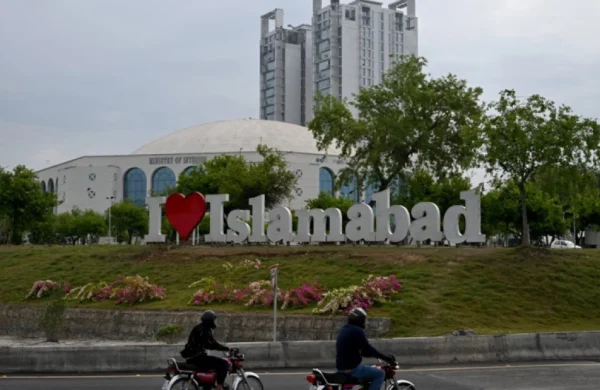
After 21 hours of marathon-like negotiations, the United States and Iran failed to reach an agreement in the latest round of talks, US Vice President JD Vance said on Sunday in Islamabad, Pakistan.
Iran’s semi-official Tasnim news agency also reported that negotiations in Islamabad concluded without any outcome, as “excessive demands” by the United States hindered the development of a common framework and agreement.
What happened?
The third round of face-to-face US-Iran talks concluded within a two-week conditional truce window, more than a month after the start of joint US-Israeli military strikes on Iran. The historic talks in Islamabad has drawn global attention amid ongoing turbulence.
However, the talks failed to produce any breakthrough. Confirming his constant communication with US President Donald Trump and others in the administration, Vance said the US side had presented its “final and best offer” after continuous communication, adding that a number of substantive discussions were conducted in “good faith,” but the proposal had yet to secure any endorsement.
Meanwhile, according to an Iranian Foreign Ministry spokesperson, the talks were conducted in an atmosphere of mistrust, and agreement shouldn’t be expected to be reached within a single session.
“We only accept an end of the war with guarantees that we won’t be attacked again,” said Mojtaba Ferdousi Pour, head of the Iranian diplomatic mission in Cairo, ahead of the talk.
Key sticking points
The US vice president said the key question between the two sides is whether Iran is willing to demonstrate sustained intent to refrain from pursuing nuclear capabilities, not only in the immediate term but in the years ahead.
Vance said Iran’s nuclear enrichment facilities have been “destroyed,” shifting the focus of negotiations to securing a long-term commitment from Tehran not to develop nuclear weapons.
“The simple fact is that we need to see an affirmative commitment that they will not seek a nuclear weapon and they will not seek the tools that would enable them to quickly achieve a nuclear weapon,” Vance said. “That is the core goal of the president of the United States and that’s what we’ve been trying to achieve through these negotiations.”
The Iranian side later confirmed that the two sides reached an understanding on several issues, but their views diverged on two or three critical ones.
Earlier in the day, Iranian Foreign Ministry spokesman Esmaeil Baghaei said on X that discussions with the United States over the past 24 hours included the Strait of Hormuz, the nuclear issue, war reparations, the lifting of sanctions, and the complete end to the war against Iran.
What’s next?
Trump said on Saturday that it “makes no difference” to him whether both sides reach a deal.
However, the failure to secure a deal has cast fresh doubt over the ceasefire’s durability, with disputes over its scope, including whether it extends to Lebanon. Uncertainty surrounding the Strait of Hormuz is adding to regional tensions.
Despite the breakdown in talks, Pakistan reiterated its readiness to facilitate dialogue between the two sides.
Pakistani Deputy Prime Minister and Foreign Minister Mohammad Ishaq Dar said on Sunday that Islamabad would continue to play a constructive role in promoting engagement between Iran and the United States.
“We hope that the two sides continue with a positive spirit to achieve durable peace and prosperity for the entire region and beyond.”







Editor & Publisher: Golam Mostafa Jibon
News & Commercial Office:
2 R. K Mission Road, Dhaka & Railgate, Sirajganj.
Hotline: 01715-319996, 01558-314179
E-mail : editor.thedailysky@gmail.com
news.thedailysky@gmail.com