

Consumers dread higher essential costs after fuel price hikes
- Update Time : Monday, September 21, 2026
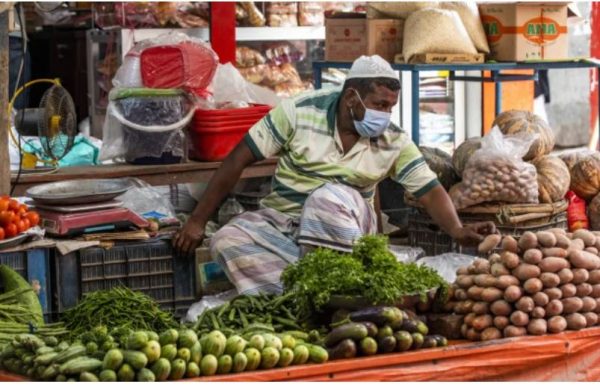
Prices of most essentials remain unchanged for now, but traders and consumers fear higher transport and supply costs could push them up in the coming days.
TDS Desk:
The recent increase in fuel prices has raised concerns over another round of price hikes in the markets, which are already under pressure from elevated prices of essential goods.
While most commodities have yet to see a direct impact from the fuel price hike, traders and consumers fear prices could rise if transportation and supply costs increase.
The situation emerged from visits to several markets in the capital and conversations with buyers and sellers today (21 September).
Miraj Ahmed, a grocery shopkeeper at New Market, said prices had not changed yet due to the fuel price hike.
“Prices of our products have not changed so far because of the fuel price increase. However, if the cost of transporting goods rises, prices of some products may go up in the coming days,” he said.
He said higher transport costs would eventually be added to the prices of goods bought from wholesale markets.
“However, it is too early to say which products will become more expensive and by how much,” he added.
Vegetable prices remain high
A visit to the markets showed that green beans were selling for Tk240 per kg, while round eggplant was Tk140, tomatoes Tk100 and green chillies Tk200.
Yardlong beans were selling for Tk100 per kg, ridge gourd Tk60, snake gourd Tk60, sponge gourd Tk80, bitter gourd Tk80, pointed gourd Tk70, okra Tk70 and cucumber Tk80.
Sweet pumpkin was Tk60 per kg, bottle gourd Tk50-70 apiece, zucchini Tk50 apiece and green bananas Tk40 per dozen. Papaya was the cheapest at Tk20 per kg.
Hafiz Uddin, a private-sector employee shopping at Hatirpool, said consumers were now waiting to see whether the fuel price hike would affect the markets.
“If transportation costs increase, vegetable prices may also go up,” he said.
Tarek, a vegetable seller at New Market, said the fuel price hike had not yet affected vegetable prices.
“However, if the cost of transporting vegetables from distant wholesale markets increases, prices may rise somewhat in the coming days,” he said.
Egg, chicken and beef prices unchanged
Egg prices remained unchanged from Friday (18 September), with a dozen selling for Tk140-145.
There was also little change in chicken prices. Broiler chicken was selling for Tk190 per kg, Sonali chicken Tk310-320, hybrid chicken Tk290-300 and layer chicken Tk350.
Beef prices also remained unchanged at Tk800 per kg.
Nazma Akter, another shopper at New Market, said higher fuel prices could make household expenses more difficult to manage.
“If the prices of essentials also rise after the fuel price hike, it will become even harder for ordinary people like us to manage household expenses,” she said.
Fish market largely stable
Fish prices also remained largely unchanged.
Pangash was selling for Tk230 per kg and tilapia Tk260. Depending on size and quality, shrimp was Tk800-900, pabda Tk350-450, large rohu Tk450-500 and tengra Tk700 per kg.
Vetki was selling for Tk400-550 per kg, mrigel Tk250-300, local koi Tk600-800 and farmed koi Tk260.
Farmed shing was Tk300-450 per kg depending on size, while medium-sized rohu was Tk270-35.
A New Market fish seller said prices had not increased yet but could rise if transportation costs went up.
“Fish is brought from outside Dhaka. So, if transport costs increase, fish prices may also rise in the coming days. We may then have to sell fish at higher prices,” he said.
Meanwhile, both retail and wholesale traders said there had been no change in the prices of grocery items so far.















Editor & Publisher: Golam Mostafa Jibon
News & Commercial Office:
2 R. K Mission Road, Dhaka & Railgate, Sirajganj.
Hotline: 01715-319996, 01558-314179
E-mail : editor.thedailysky@gmail.com
news.thedailysky@gmail.com