

Collapse of rawhide market in North hits traders, poorer
- Update Time : Saturday, May 30, 2026
TDS Desk
For seasonal traders, it offers a rare opportunity to earn additional income, while for madrasas and orphanages, the proceeds help cover operating costs throughout the year. For the leather industry, sacrificial animal hides provide a major source of raw material.
This year, however, traders across northern Bangladesh say the system has all but broken down.
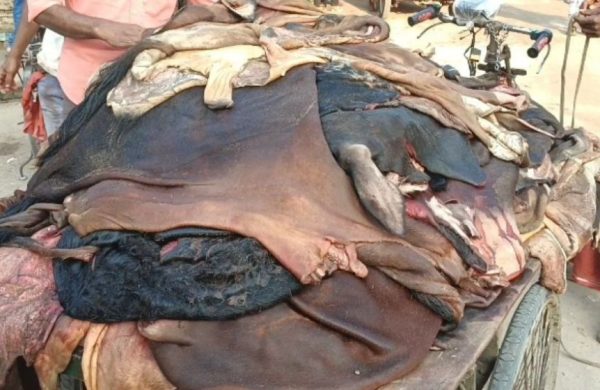
From Rangpur and Gaibandha to Bogura, Joypurhat and Naogaon, thousands of sacrificial animal hides were reportedly sold far below government-set prices, while many goat hides were abandoned altogether due to a lack of buyers. Traders, religious institutions and market operators describe a season marked by weak demand, mounting debts, and widespread uncertainty about the future of the industry.
Prices plunge far below official rates
Ahead of Eid, the government fixed the price of salted cowhide outside Dhaka at Tk57-62 per square foot. Based on those rates, a medium-sized cowhide should have fetched roughly Tk1,200 to Tk1,500.
Field reports from northern districts painted a starkly different picture.
In several markets in Rangpur, Bogura and Gaibandha, cowhides reportedly sold for as little as Tk100 to Tk500. Goat hides, which previously held significant market value, often sold for only Tk5 to Tk30. In some areas, traders and those offering sacrifices said they were unable to find buyers at any price.
The decline reflects a trend that many traders say has persisted for years. Industry participants noted that quality cowhides that once sold for Tk2,000 to Tk3,000 now command only a fraction of their former value.
Small traders bear the biggest burden
The impact has been especially severe for seasonal traders.
Many operate with limited capital and rely on short-term borrowing during Eid to purchase hides from local communities. When prices collapse, they are often left with losses they cannot absorb.
In Taraganj upazila of Rangpur, trader Azizul Islam said he purchased a cowhide for Tk400 but later received an offer of only Tk150 from wholesalers. After transportation expenses, he was left with a loss.
In Gaibandha, trader Manik Chandra Robidas said he borrowed Tk40,000 to buy hides but was unable to secure buyers despite spending several days in local markets.
Similar experiences were reported by traders across multiple districts. Several said they had borrowed money from informal lenders and now face growing debt burdens due to unsold stock.
Traders described this year’s market as one of the worst in recent years.
Madrasas and orphanages lose a key source of income
The collapse of the hide market is also affecting religious and charitable institutions that traditionally receive donated hides during Eid-ul-Azha.
Across Bangladesh, sacrificial hides are often donated to madrasas, orphanages and welfare organisations as well as mosques. The sale of those hides provides funding for food, accommodation and educational expenses.
This year, many institutions reported receiving little financial benefit from donated hides.
Several madrasa officials in Rangpur and Gaibandha said buyers either failed to appear or offered prices so low that the proceeds barely covered preservation costs.
In some cases, institutions reported being unable to sell collected hides at all.
Local residents and religious leaders expressed concern that if current conditions continue, many institutions may lose an important source of annual revenue.
Why has the market collapsed?
Traders and industry representatives point to several factors behind the crisis.
One frequently cited issue is the concentration of purchasing power among a relatively small number of tannery operators. Local traders argue that when major buyers reduce purchases or delay procurement, the effects ripple through the entire supply chain.
Another major concern involves unpaid debts.
According to traders’ associations in the districts of northern Bangladesh, many regional traders are owed substantial sums by tannery operators from previous years. As a result, local wholesalers have less working capital available to purchase hides during the Eid season.
Without cash flow, traders become reluctant to buy, causing activity across the market to slow.
Rising preservation costs have further complicated the situation. Traders reported significant increases in salt prices this year, driving up the cost of storing hides while market demand remained weak.
Regional markets struggle
Conditions were similar across many northern districts.
In Rangpur, traders reported unusually low buyer participation, with many warehouses remaining inactive during what is normally the busiest trading period of the year.
In Naogaon’s Chokboidyanath market, one of the country’s major hide trading hubs, business activity continued but traders reported prices well below officially fixed rates.
Gaibandha’s Kali Bazaar saw a large volume of hides brought to market, yet many traders said demand remained weak.
In Joypurhat, some traders opted out of trading altogether, citing repeated losses in previous years.
Bogura traders also reported low prices and limited demand despite significant post-Eid market activity.
Officials promise monitoring
Local administrations have stated that monitoring efforts are underway.
Officials in Naogaon said mobile courts were operating to oversee market conditions, while law enforcement agencies reported measures to prevent extortion and illegal activities.
However, traders argue that monitoring alone will not solve the underlying problems facing the sector.
They say stronger enforcement of official pricing policies, improved financial oversight of tannery operators, and easier access to credit for small traders are necessary to restore confidence in the market.
A sector at a crossroads
Bangladesh’s leather industry remains one of the country’s important export-oriented sectors, and Eid-ul-Azha continues to provide a significant portion of the industry’s annual raw material supply.
Yet this year’s market has exposed deep weaknesses across the supply chain.
For seasonal traders, the losses have created financial uncertainty. For madrasas and orphanages, reduced hide values have translated into lost income. And for many who offer sacrifices, the experience has raised questions about why government-declared prices bear so little resemblance to actual market conditions.
Unless long-standing issues involving market concentration, unpaid debts, and financing are addressed, traders warn that future Eid seasons may bring further decline to a trade that once provided economic benefits to thousands of families across northern Bangladesh. Source: Daily Sun











Editor & Publisher: Golam Mostafa Jibon
News & Commercial Office:
2 R. K Mission Road, Dhaka & Railgate, Sirajganj.
Hotline: 01715-319996, 01558-314179
E-mail : editor.thedailysky@gmail.com
news.thedailysky@gmail.com