

Soybean oil supply squeeze raises fresh concerns over price manipulation
- Update Time : Saturday, September 26, 2026
TDS Desk
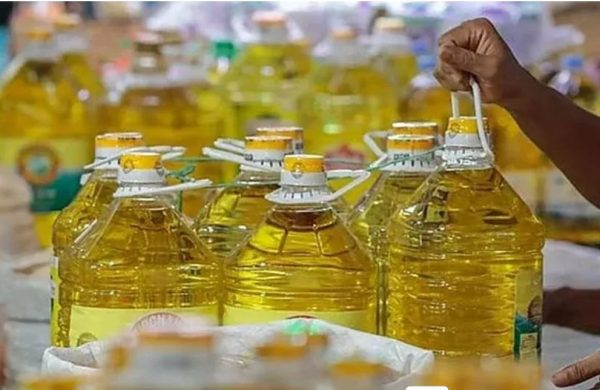
A fresh attempt to push up soybean oil prices appears to be underway, with allegations that an influential business syndicate is deliberately creating an artificial supply shortage to pressure the government into allowing another price hike.
According to market sources, the syndicate is reportedly targeting a further increase of Tk6 per litre. As part of the alleged strategy, supplies of bottled soybean oil in one- and two-litre containers have been reduced at the mill-gate level, creating shortages among dealers and subsequently affecting retail markets.
Consumers in neighbourhood shops are now reportedly struggling to buy soybean oil according to their needs, leaving many at the mercy of market manipulation.
Despite the government’s existing price ceiling, loose soybean oil is being sold at Tk195 per litre in retail markets—Tk15 above the officially fixed price. This means consumers are already bearing the burden of higher prices without any fresh government announcement.
SM Nazer Hossain, vice-president of the Consumers Association of Bangladesh (CAB), said four to five major companies control around 85-90 percent of the country’s soybean oil market, while smaller companies account for the remaining 10-15 percent.
He alleged that the major companies sometimes reduce supplies through their dealers to increase profits, creating pressure on the government and consumers before seeking a price increase.
“The same method has been used several times over the past few years to put pressure on the government and force up prices,” he said, adding that even after official prices are fixed, edible oil is often sold Tk5-10 above the prescribed rate.
He called for effective government measures to prevent such practices.
A market survey on Friday morning found shortages of bottled soybean oil in several shops in the capital.
At Naya Bazar, four of six grocery shops visited around 10:30am had no one- or two-litre bottled soybean oil. At Zinjira Kacha Bazar, one-litre bottles were available at only three of eight shops, while two-litre bottles were found at two others. Five-litre bottles, however, were available at the shops surveyed.
Sagar, a grocery trader at Zinjira Kacha Bazar, said his shop needs around 20 cartons of one- and two-litre soybean oil daily, but dealers are supplying only two to four cartons.
“Supplies are being reduced deliberately, apparently to create pressure for another price increase,” he said.
The latest development comes after the Bangladesh Vegetable Oil Refiners and Vanaspati Manufacturers Association submitted a proposal to the Commerce Ministry on July 11 seeking an increase of Tk8-10 per litre, citing higher prices on the international market.
The association had proposed raising the retail price of bottled soybean oil by Tk10 to Tk209 per litre. It also sought an increase of Tk10 for a five-litre bottle to Tk1,015 and a Tk8 increase in the price of loose soybean oil to Tk188 per litre. In addition, it proposed raising the price of loose palm oil by Tk13 to Tk183 per litre.
The government initially made no final decision on the proposals. A meeting was held at the Commerce Ministry about a week after the letter was submitted, but it ended without a resolution.
On September 2, the government eventually accepted part of the industry’s demand, raising the price of one-litre bottled soybean oil by Tk5 to Tk204 and loose soybean oil by Tk4 to Tk180 per litre.
However, as the increase fell short of the companies’ demand for a Tk10 hike, allegations have now emerged that supplies are again being restricted to create pressure for another adjustment.
A dealer of a soybean oil brand at Kawran Bazar, speaking on condition of anonymity, said companies were seeking another price increase and had therefore reduced supplies to dealers.
“We are supplying retailers as long as we have stock. If the company does not supply us with oil, we cannot supply the retailers,” he said, adding that similar situations had occurred several times in the past.
The Bangladesh Vegetable Oil Refiners and Vanaspati Manufacturers Association, however, maintains that the industry is facing higher costs.
Association sources said international edible oil prices had increased, while import-related expenses had also risen. Higher fuel prices had further increased transportation costs. As a result, they claimed, companies were incurring additional costs of Tk18-20 per litre compared with current market prices.
A senior official of the Commerce Ministry’s task force on commodity prices, speaking on condition of anonymity, said businesses had been demanding higher prices citing increased international prices and transportation costs.
He said the companies had sought a much larger increase of Tk10 per litre, but the government had decided to raise prices by Tk5 after assessing the overall market situation.
“There is currently no shortage of edible oil,” he said. “The companies have not submitted any fresh proposal to the government for another price increase. If they reduce supplies to create pressure for a price hike, the matter will be investigated and action will be taken accordingly.”
The latest allegations have once again raised questions over supply management and market monitoring in the edible oil sector, particularly at a time when consumers are already facing higher prices in retail markets.










Editor & Publisher: Golam Mostafa Jibon
News & Commercial Office:
2 R. K Mission Road, Dhaka & Railgate, Sirajganj.
Hotline: 01715-319996, 01558-314179
E-mail : editor.thedailysky@gmail.com
news.thedailysky@gmail.com